Build a three-year cleaner budget with room for unknowns
Separate purchase, recurring costs and possible replacements in a transparent GBP ownership plan.
Updated:
Choose a comparison period for planning
A three-year budget is a planning window, not a prediction that an appliance will last exactly that long. Use the same period for all candidates and state why it is useful to you. Begin with the delivered purchase price and the equipment you need immediately, then list recurring consumables separately.
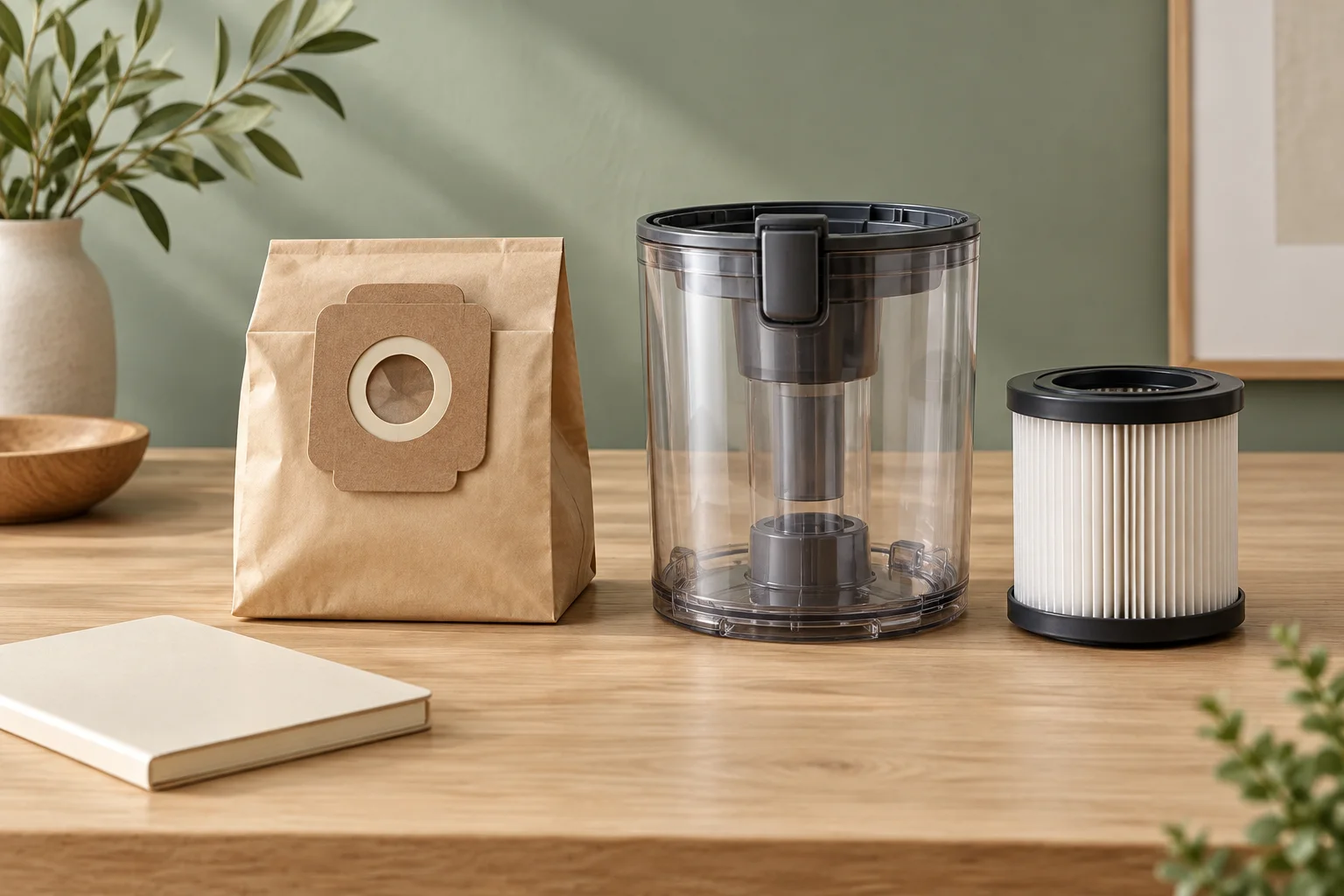
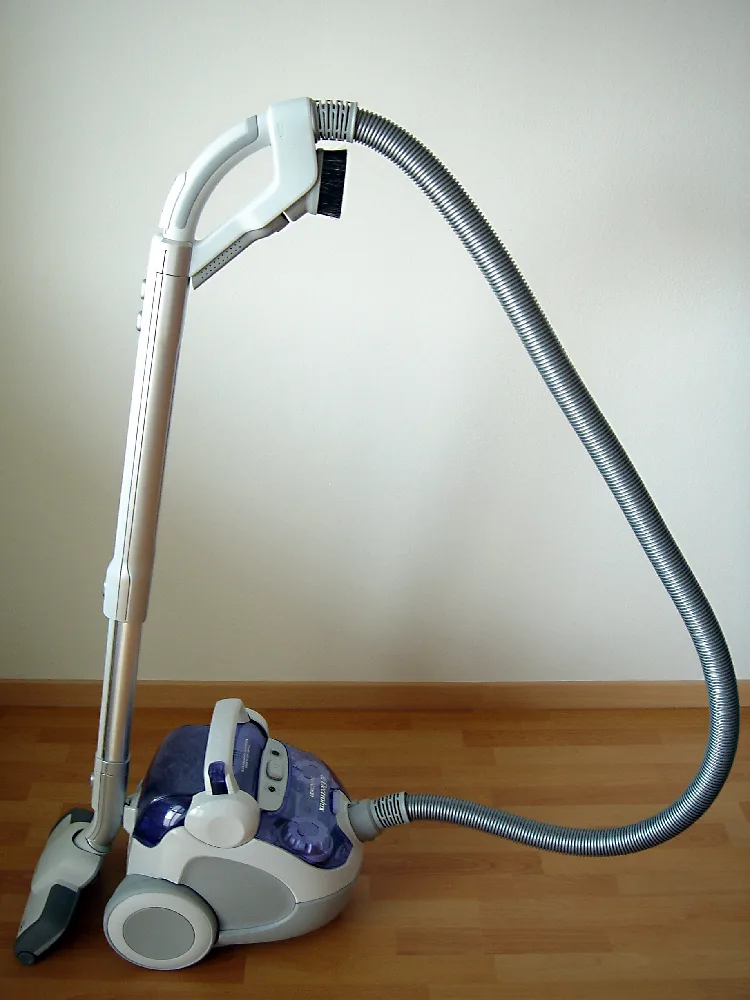
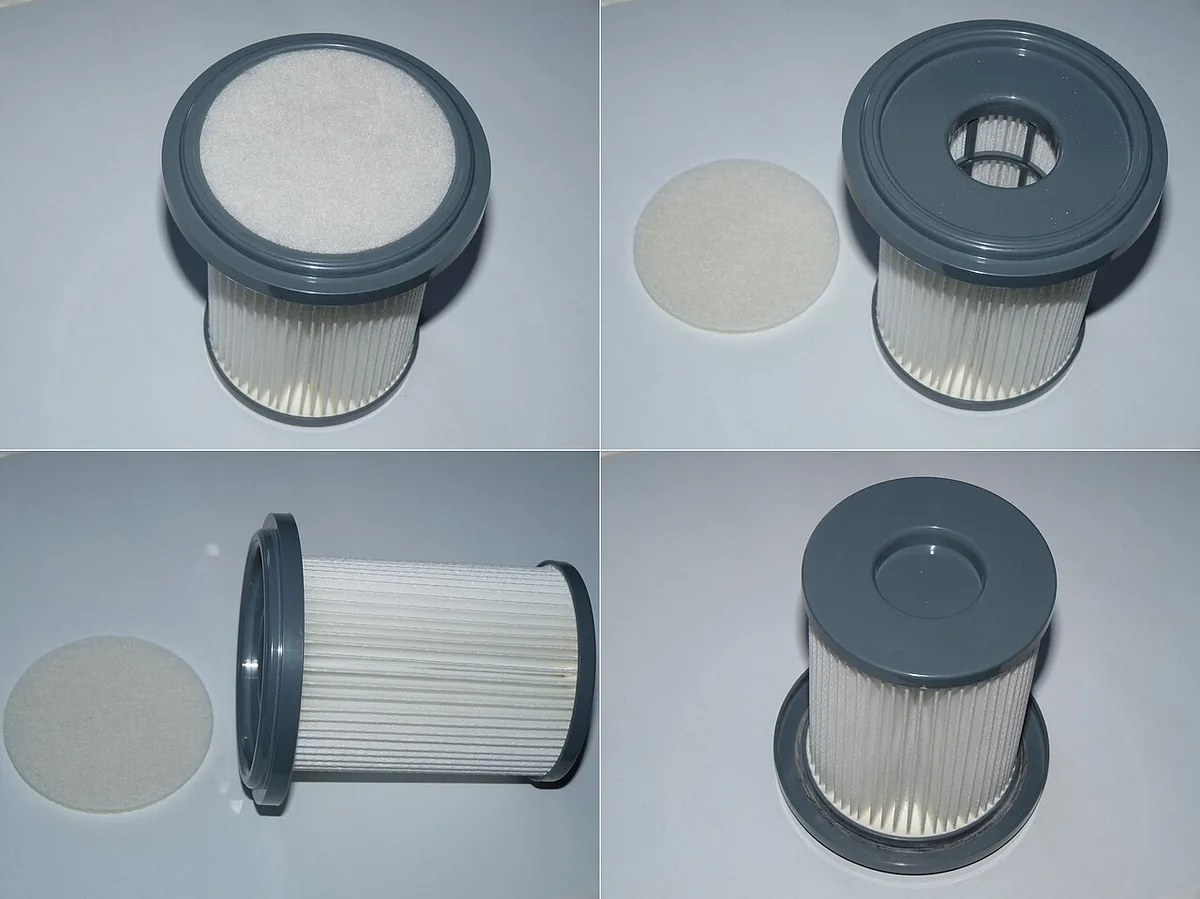
Identify compatible parts before assigning prices. Miele's UK finder shows a model-specific lookup for bags and filters. A generic online pack that looks similar is not enough to establish the cost of maintaining a particular cleaner. Keep the checked model, part reference and price date with your budget so you can revisit the calculation later.
Miele UK: model-specific bag and filter finder ?
Keep the base case deliberately simple
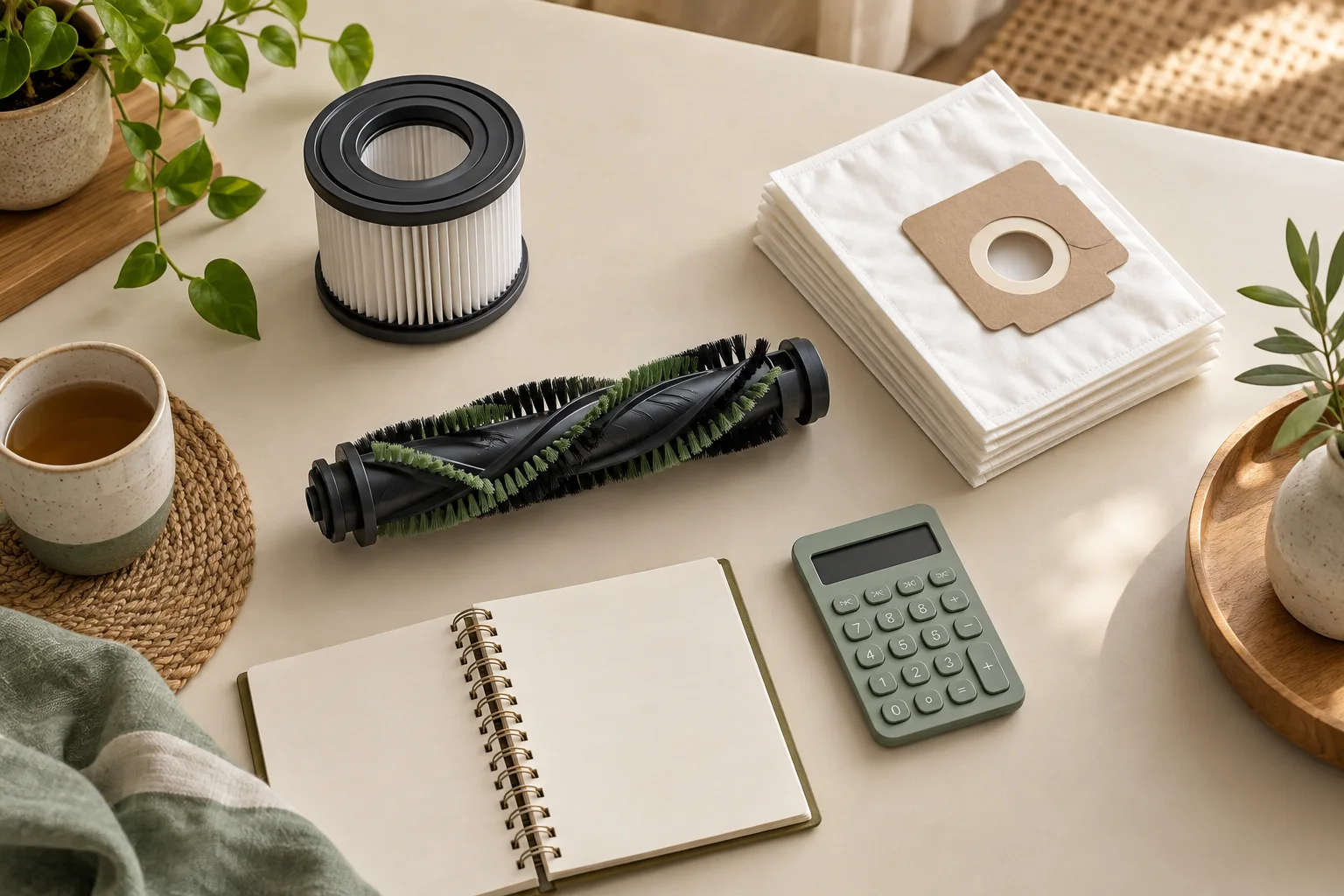
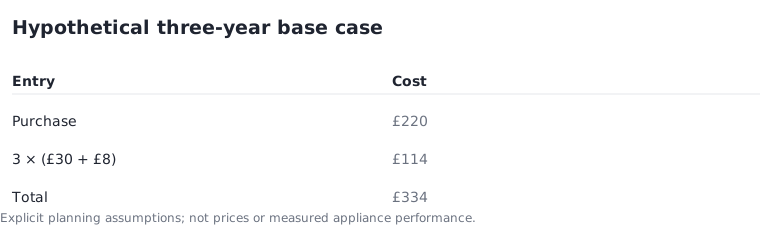
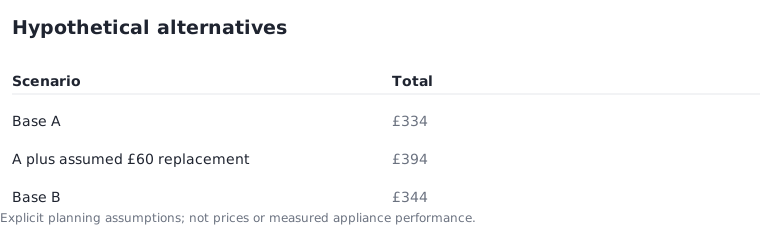
Assume a purchase costs £220, recurring consumables cost £30 each year and electricity costs £8 each year. Over 3 years the illustrative total is £220 plus three times £38, or £334. These values are hypothetical; they are not current prices, a recommended tariff or a forecast of actual failures.
The base case should contain only items you have consciously included. Label exclusions such as repairs, optional accessories or delivery if the purchase figure does not cover them. Do not enter a zero for an unknown cost merely to complete a spreadsheet. Mark it unknown, then explore a scenario if the uncertainty could affect the purchase decision.
Add a replacement scenario without pretending it is certain
Suppose you want to see the effect of a hypothetical £60 part replacement during the comparison period. Adding it to the assumed £334 base gives £394. The calculation does not say that the part will fail, that £60 is its market price or that replacement is the correct remedy for a fault.
Keep the scenario on a separate line so it cannot be mistaken for an expected bill. If you have a real compatible part quotation, save its source and date and replace the placeholder amount. Check whether the proposed action is owner-permitted maintenance or requires professional service. A cost estimate is not a repair instruction.
Compare totals only after comparing included work
An assumed second candidate costs £260 and has £20 annual consumables plus £8 annual electricity. Its three-year subtotal is £344. Against the first base case of £334, the difference is £10, before any unmatched exclusions. That small difference may change when you refine one uncertain input.
Also compare the work around the appliance. Dyson's washable-filter guidance requires the applicable part to be fully dry before refitting. Waiting time and hands-on care are not captured by the cash total. Keep a second column for the routine you can realistically maintain, especially if a spare machine or spare compatible part would be needed during downtime.
Use the budget as a living record
Save the assumptions and refresh prices before making a purchase. After ownership begins, replace estimates with your actual spending and observed usage. Preserve the original assumptions so you can see why the result changed rather than rewriting the past as if every cost had been known.
The outcome should be a readable decision record: what is included, what is uncertain and what practical work remains. Do not turn a narrow numerical lead into a claim that an entire appliance category is cheaper. The model-specific care requirements and suitability for your floors remain essential parts of the decision alongside the GBP total.