Check both manuals before using steam on a floor
Resolve appliance claims and flooring restrictions before adding a steam cleaner to your routine.
Updated:
Identify the installed floor before the appliance
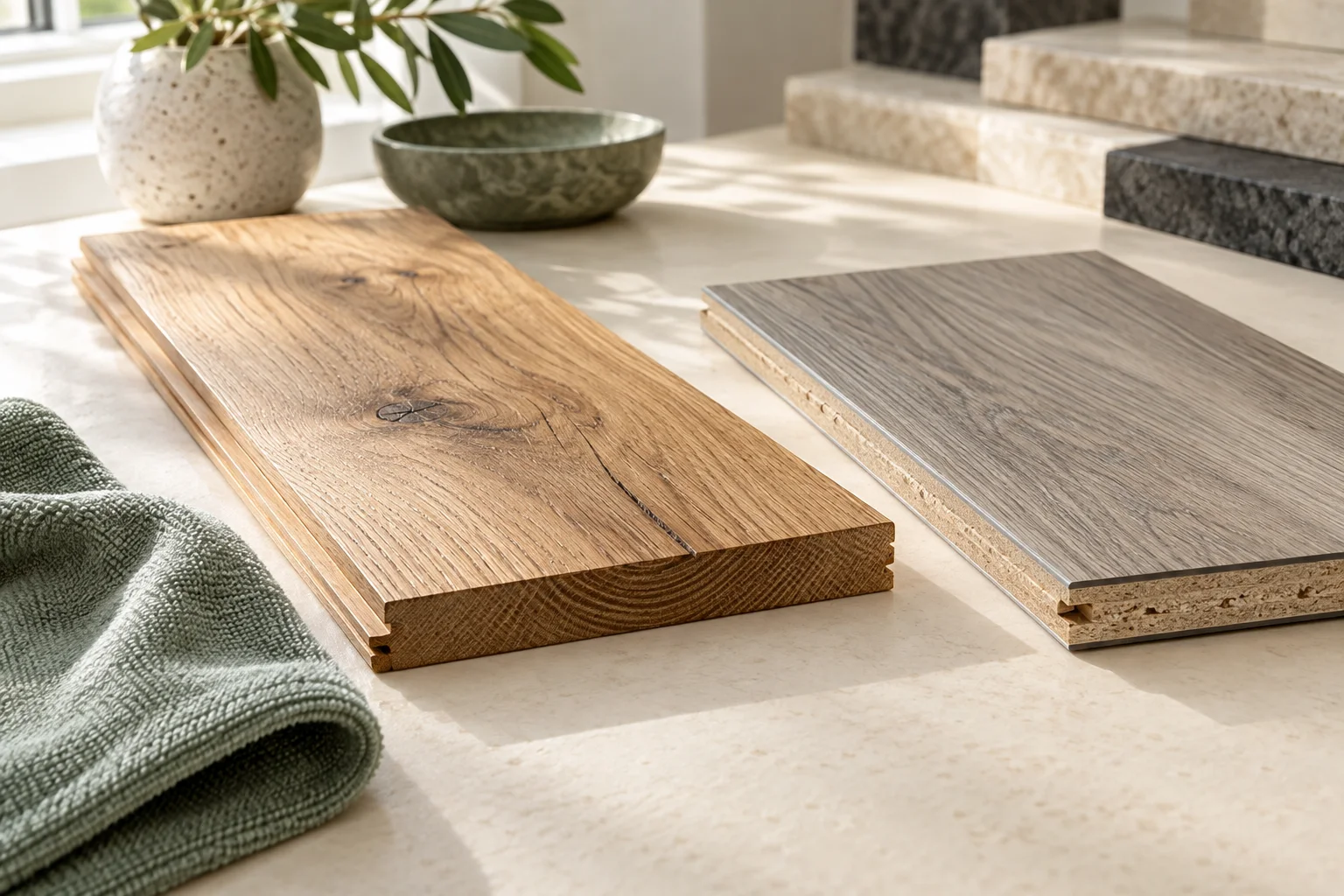
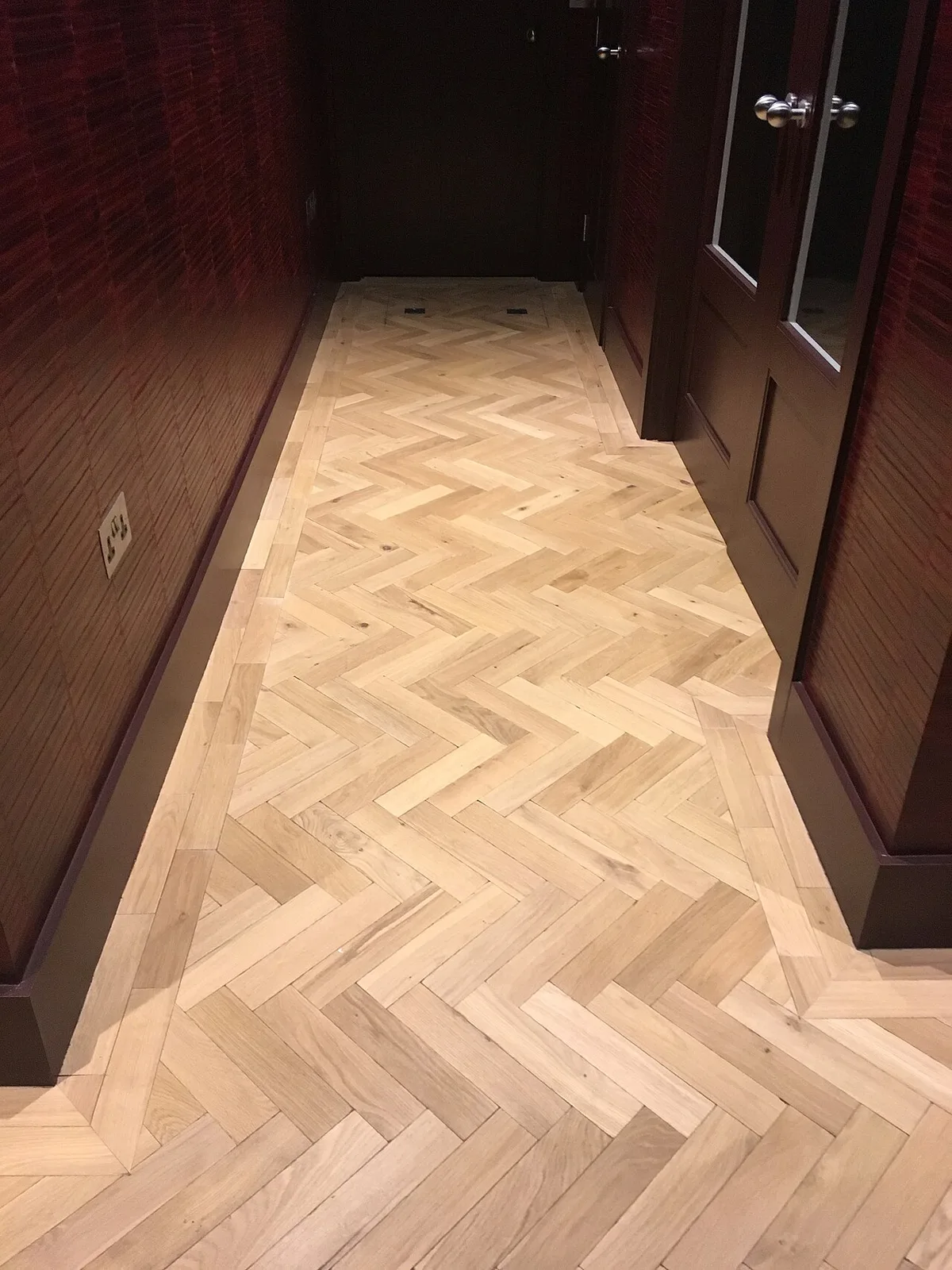
A floor can look like timber without being timber, and genuine timber can have different surface treatments. Begin with the installer paperwork, spare packaging or the flooring manufacturer's product record. Kärcher's UK floor-care explanation distinguishes parquet, laminate and their finishes; the care requirements for your installed product still need to be established.
Write the floor brand, range and finish in a household note. If the information is missing, record the uncertainty instead of assigning a material by appearance. A photograph can help an installer identify possibilities, but it does not prove that heat or moisture is permitted. Keep the planned cleaning method undecided until the relevant care instructions are available.
Kärcher UK: parquet and laminate care ?
Treat a restriction as a decision, not a puzzle to bypass
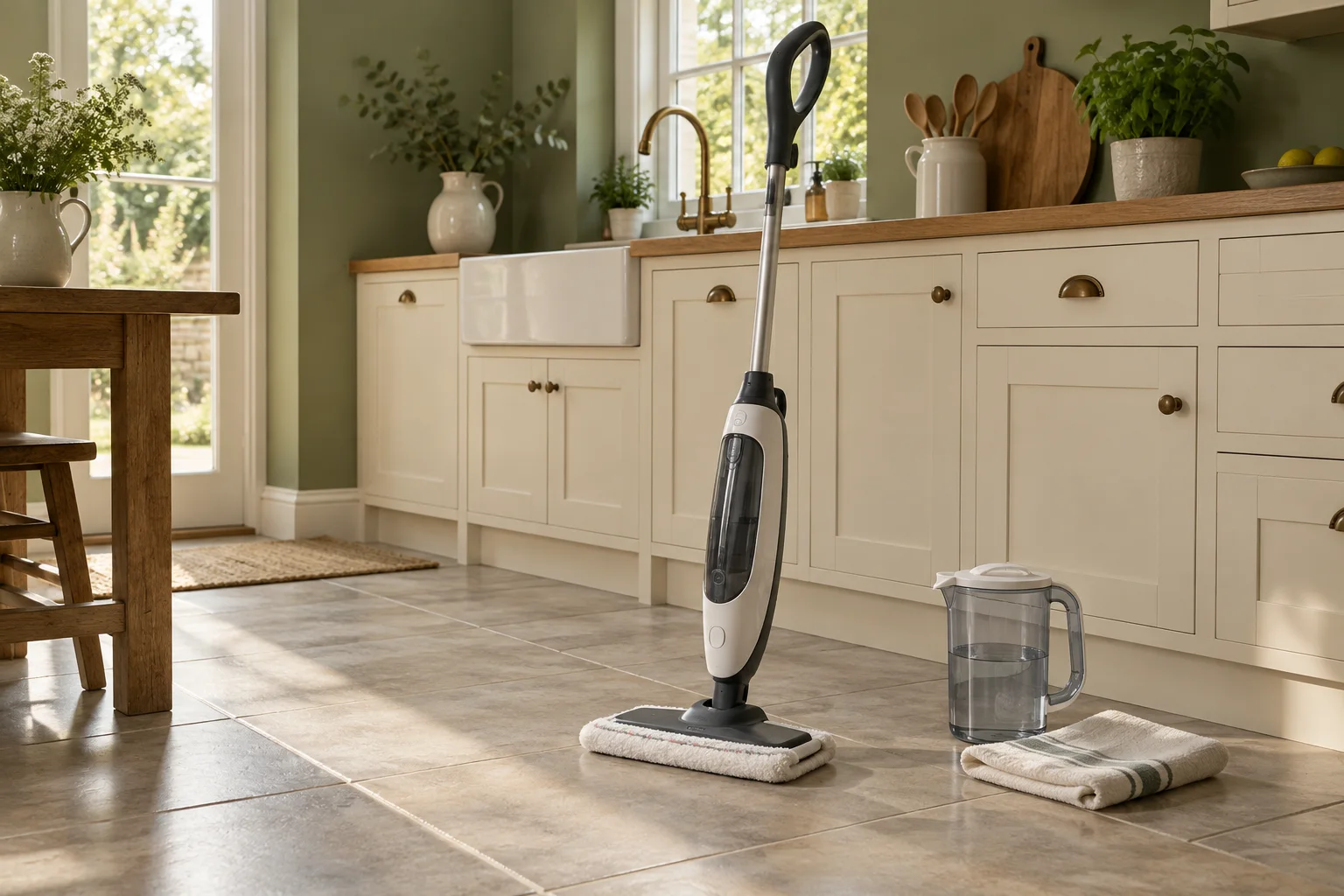
Karndean's UK guidance does not recommend steam mops or steam cleaners for its floors. That is a concrete reason to reject steam for a floor covered by that instruction, even if an appliance description uses broad wording about hard surfaces. A low setting is not a substitute for permission from the flooring manufacturer.
Compare the two instruction sets side by side. If the appliance says a surface type can be cleaned but the flooring maker prohibits the method for the installed product, the floor restriction matters. Do not test an inconspicuous corner as a way of overriding an explicit prohibition. A short trial cannot establish the long-term result or change the product's care requirements.
Karndean UK: floor-care questions ?
Separate eligible rooms from the rest
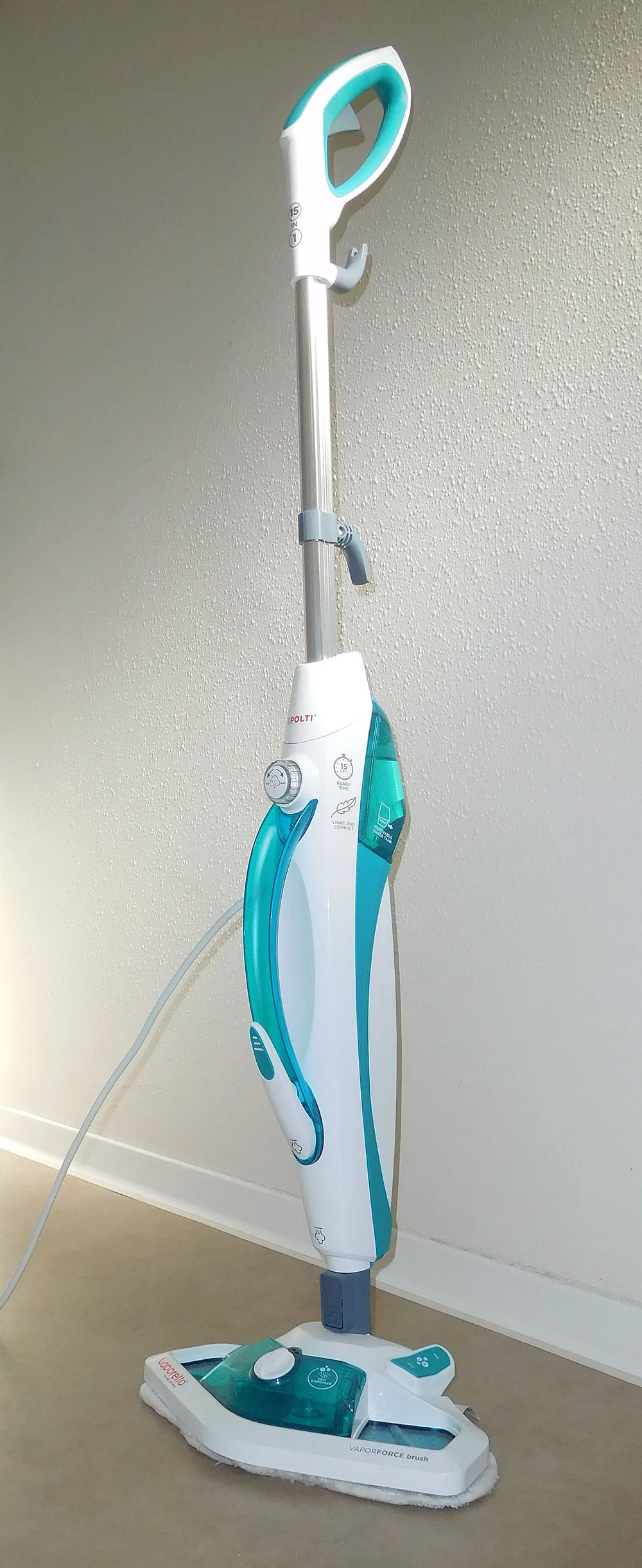
Suppose a hypothetical home contains 30 square metres of hard flooring, but only 12 square metres are confirmed suitable for a particular steam method under both sets of instructions. The eligible share is 40%, leaving 60% outside that plan. These assumed areas are not a recommendation to use steam on any named material.
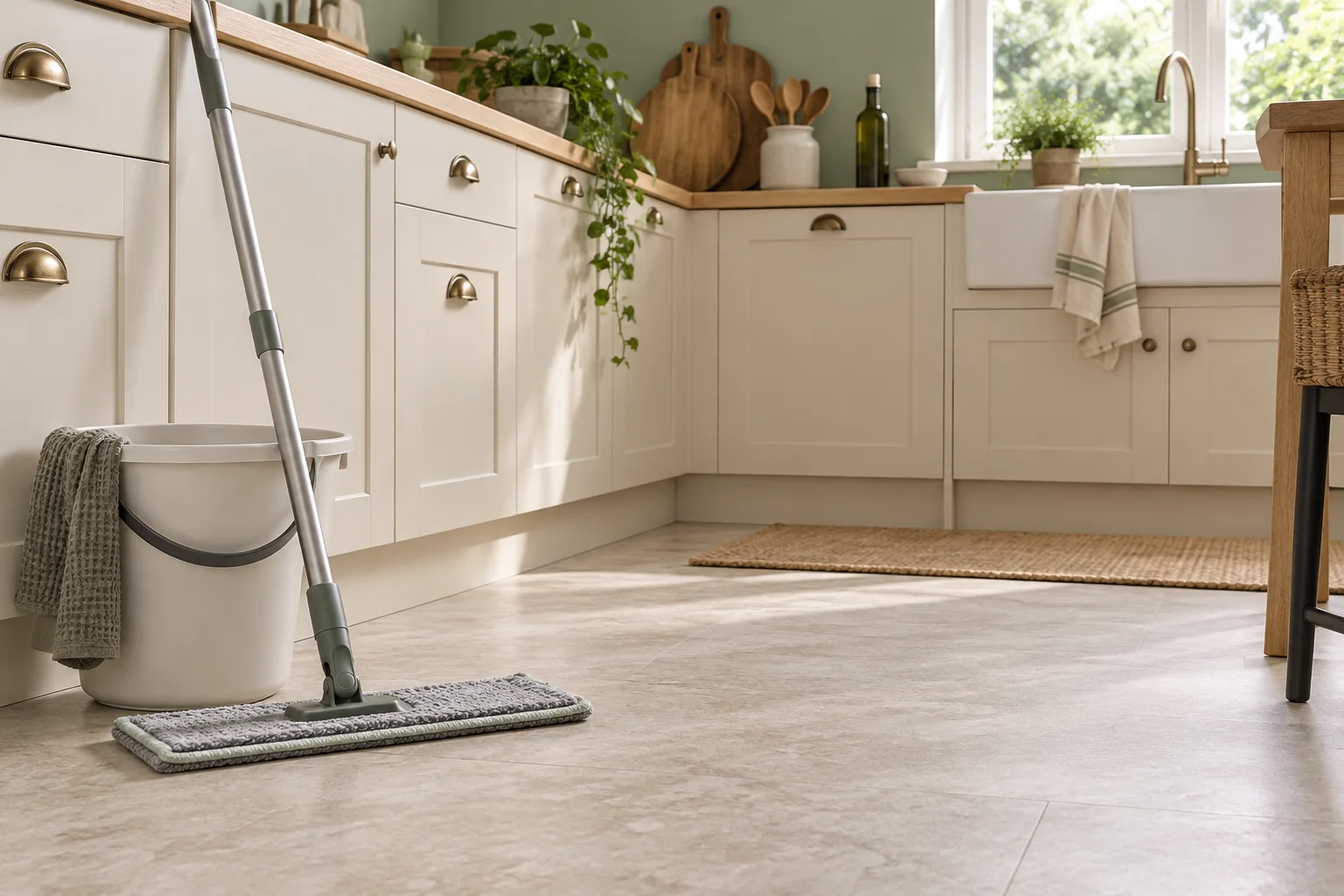
Use the confirmed area when judging whether another appliance is useful. The gross hard-floor area can make a specialist machine look more versatile than it will be in practice. Add the tasks that remain manual or use another permitted method. This creates a clearer purchase question: whether the new appliance improves the approved part of the routine enough to justify its storage and care.

Budget setup and finish time as well as movement
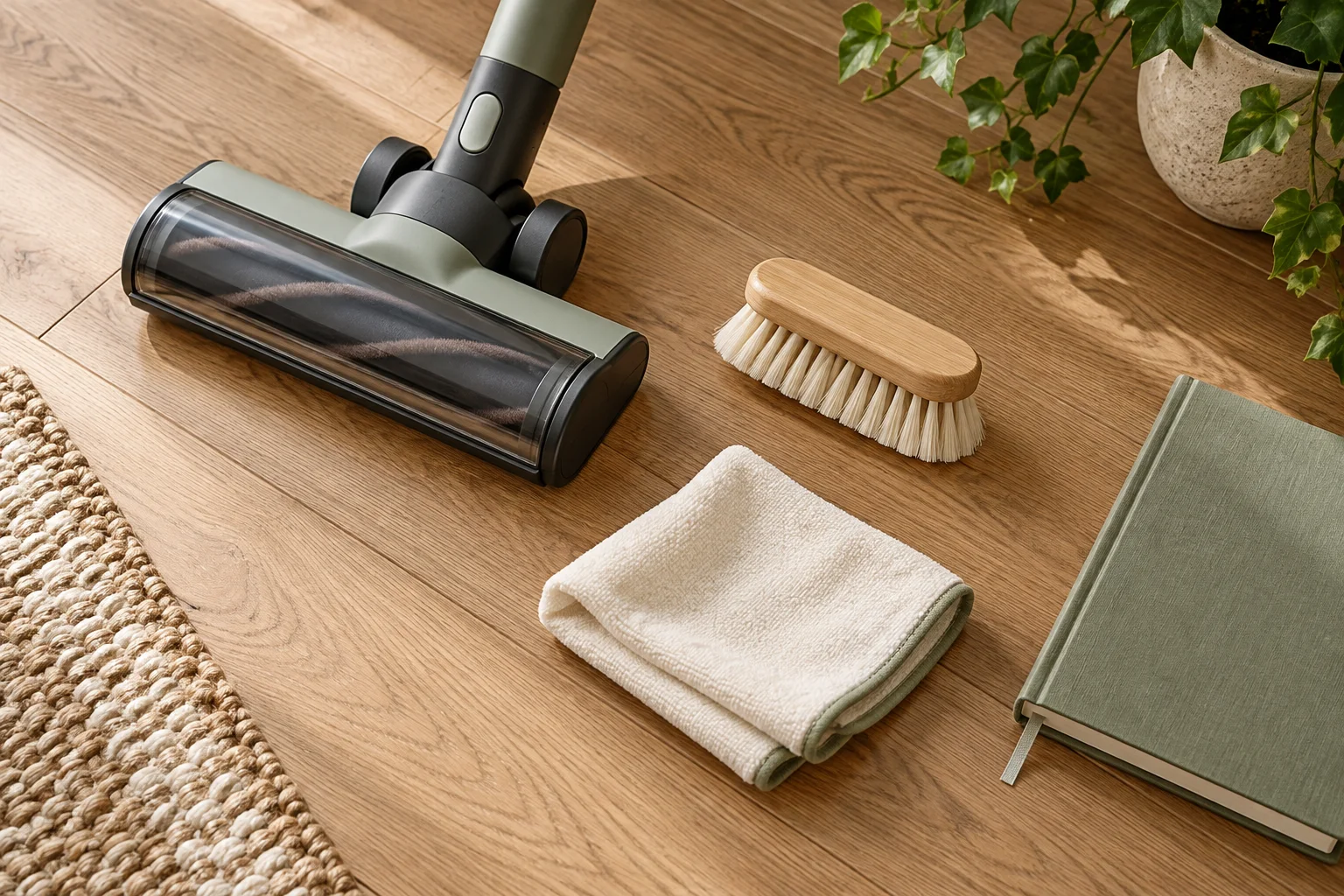
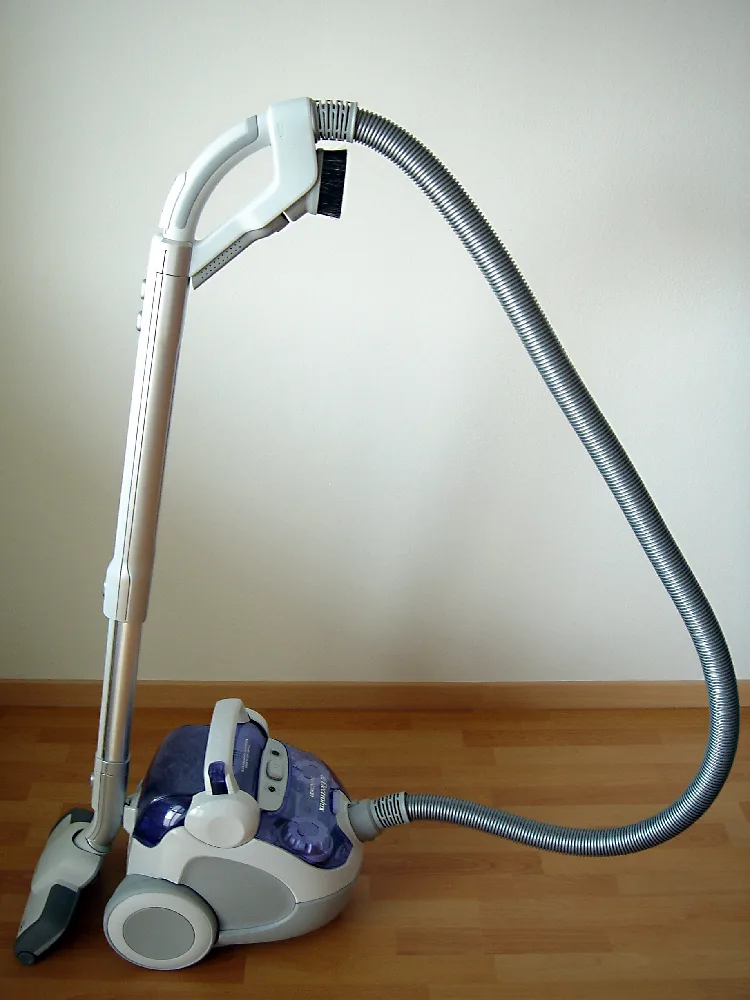
Dry collection and wet cleaning are separate stages where the chosen instructions require them. The cylinder vacuum photograph illustrates an alternative physical tool for collecting loose debris; it does not certify that its head is suitable for your floor. Check the head and surface guidance independently.
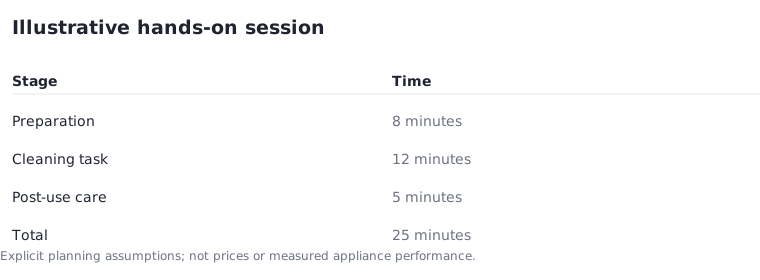
For an illustrative session, allow 8 minutes for preparation, 12 minutes for the planned cleaning task and 5 minutes for the permitted post-use care. The total hands-on allowance is 25 minutes. Any manufacturer-required waiting or cooling time is additional and should be recorded separately. Substitute your own timings after following the exact procedure.
Keep a floor-specific cleaning card
Create one short instruction card for each different floor in the home. Include the approved method, permitted product where relevant, official care link and any prohibition. Keep the wording specific enough that a household member will not apply the kitchen routine automatically to a bedroom.
Revisit the card when the flooring changes or a new appliance arrives. If compatibility remains unresolved, choose an established method already permitted by the floor's instructions. The objective is not to find a way to use every function you bought. It is to select equipment whose intended use genuinely matches the surfaces you need to maintain.