Wood-look is a description, not a cleaning instruction
Identify timber, laminate and surface treatment before deciding how to clean a wood-look floor.
Updated:
Recover the product identity
The most useful cleaning information may be on a spare board box or an installer invoice rather than on the visible surface. Start there when you need to identify a wood-look floor. Kärcher's UK guide discusses differences between parquet, laminate and finishes, but it cannot identify the floor in your room from a verbal description.
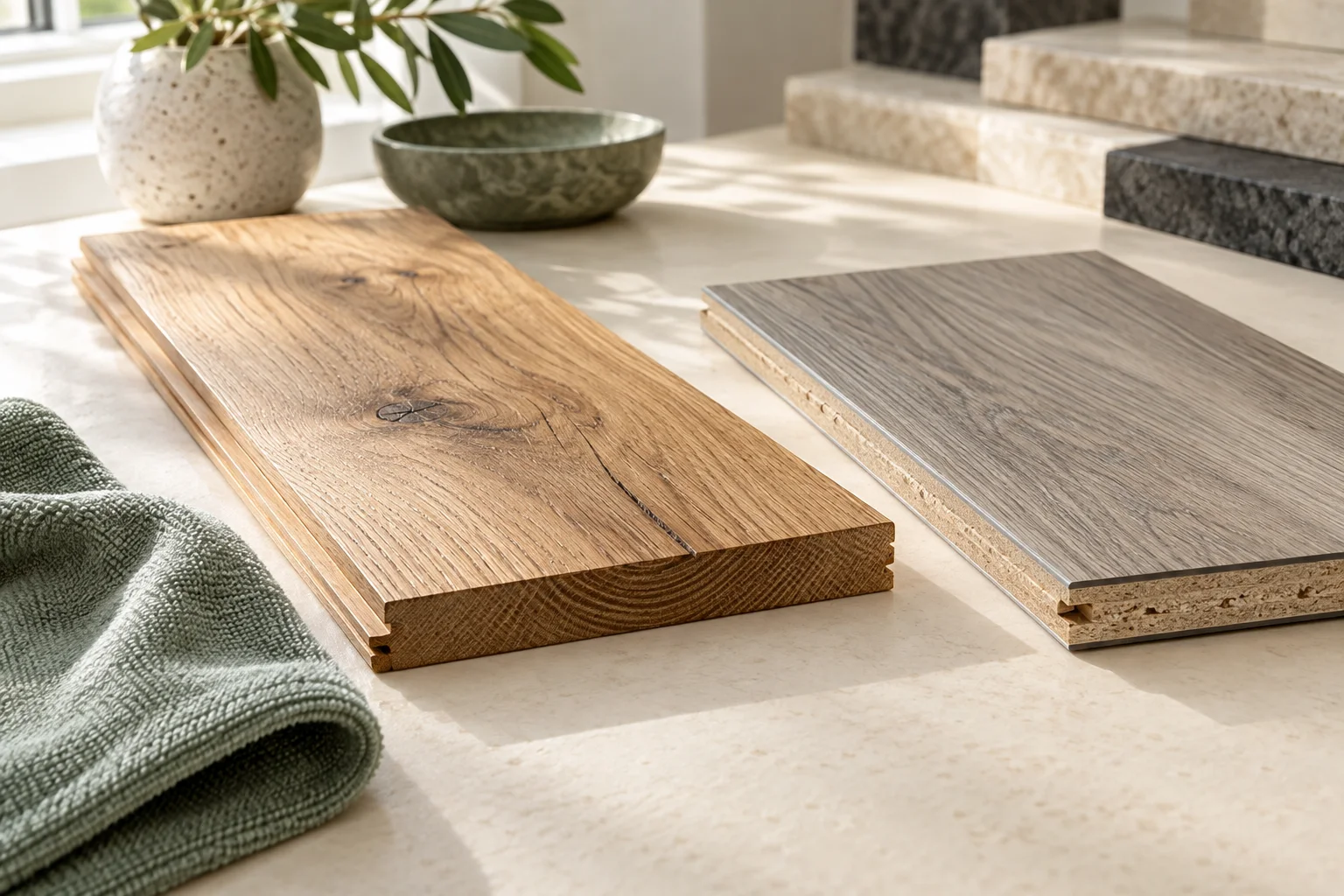
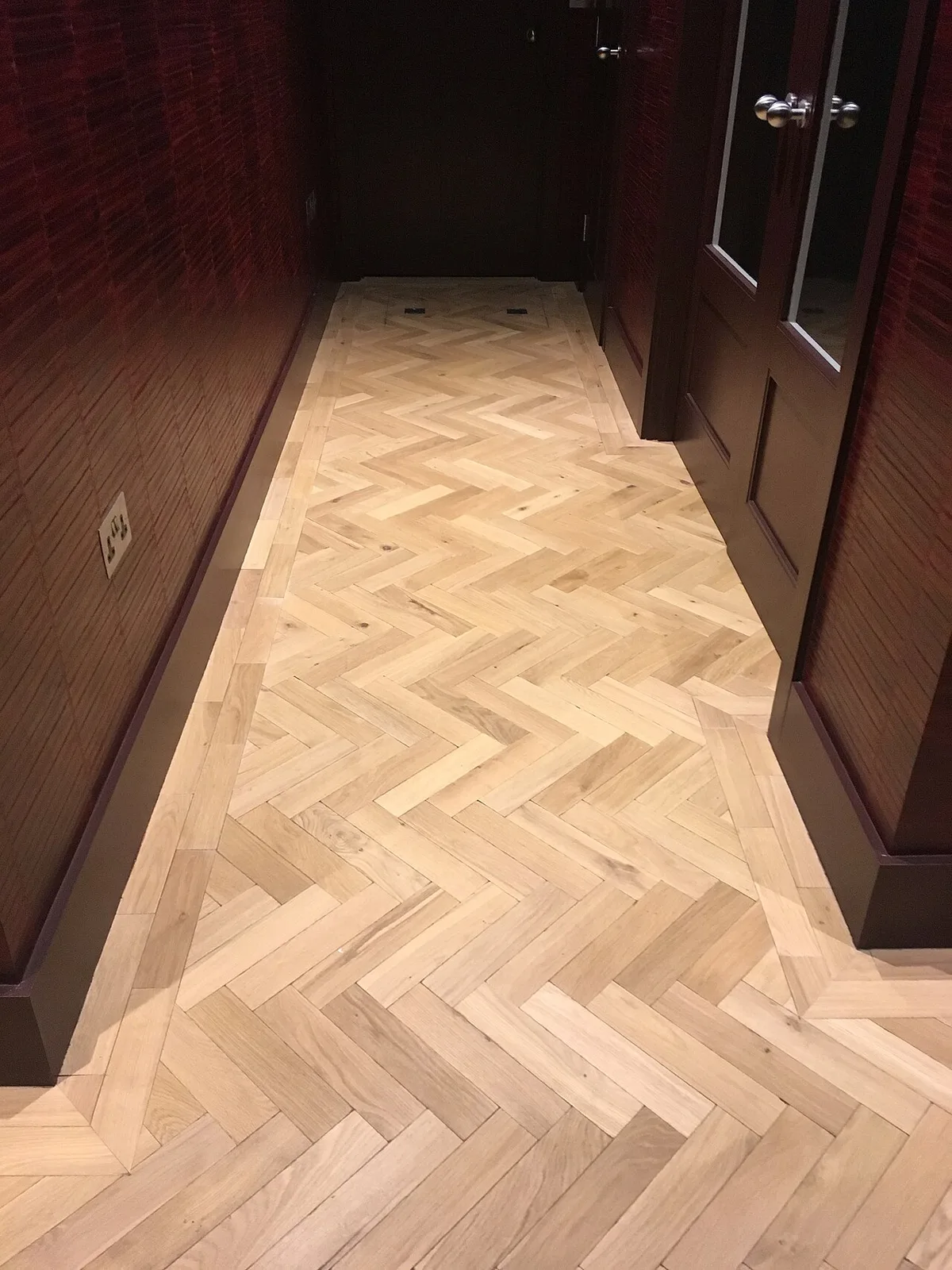
Record what you know and what remains uncertain. Separate the material from its surface treatment: knowing that a floor contains timber does not by itself tell you its permitted cleaning process. The parquet photograph shows grain and joints, not an invisible maintenance specification. Avoid using an attractive image as evidence that a particular method is safe for your own boards.
Kärcher UK: parquet and laminate care ?
Look for the installed product care guide
Once you have the manufacturer and range, find the corresponding care information. Check whether it addresses the installed finish and any treatment applied later. A general appliance article can explain a technique, but the flooring documentation supplies the conditions for that surface.
Keep steam separate from ordinary damp cleaning in your notes. Karndean, for example, explicitly discourages steam on its floors; that is a reminder that wood-like appearance is not enough to grant permission. It is not evidence that your floor is Karndean, nor a universal rule for every wood-look product. The relevant instruction is the one that actually matches the installed material.
Karndean UK: floor-care questions ?
Create a small maintenance map
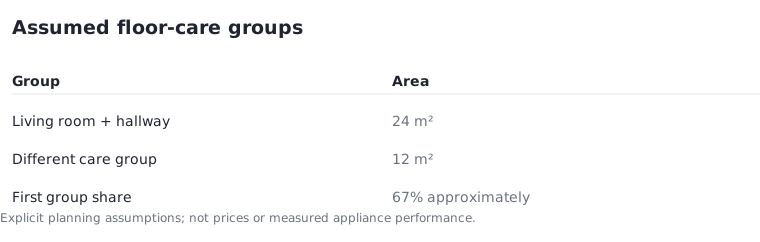
Divide the home into areas sharing the same documented care method. In an assumed layout, a living room occupies 18 square metres and a hallway 6 square metres, giving 24 square metres together. A separate 12-square-metre room has different flooring. The first group is therefore two-thirds of the 36-square-metre total, approximately 67%.
That grouping helps organise tools and consumables without pretending that all boards are interchangeable. Label your private cleaning note by room rather than by a vague colour such as light wood. If a doorway joins two materials that look similar, mark the transition. The point is to stop a familiar routine crossing into a surface with different requirements.
Use time estimates to choose a practical routine
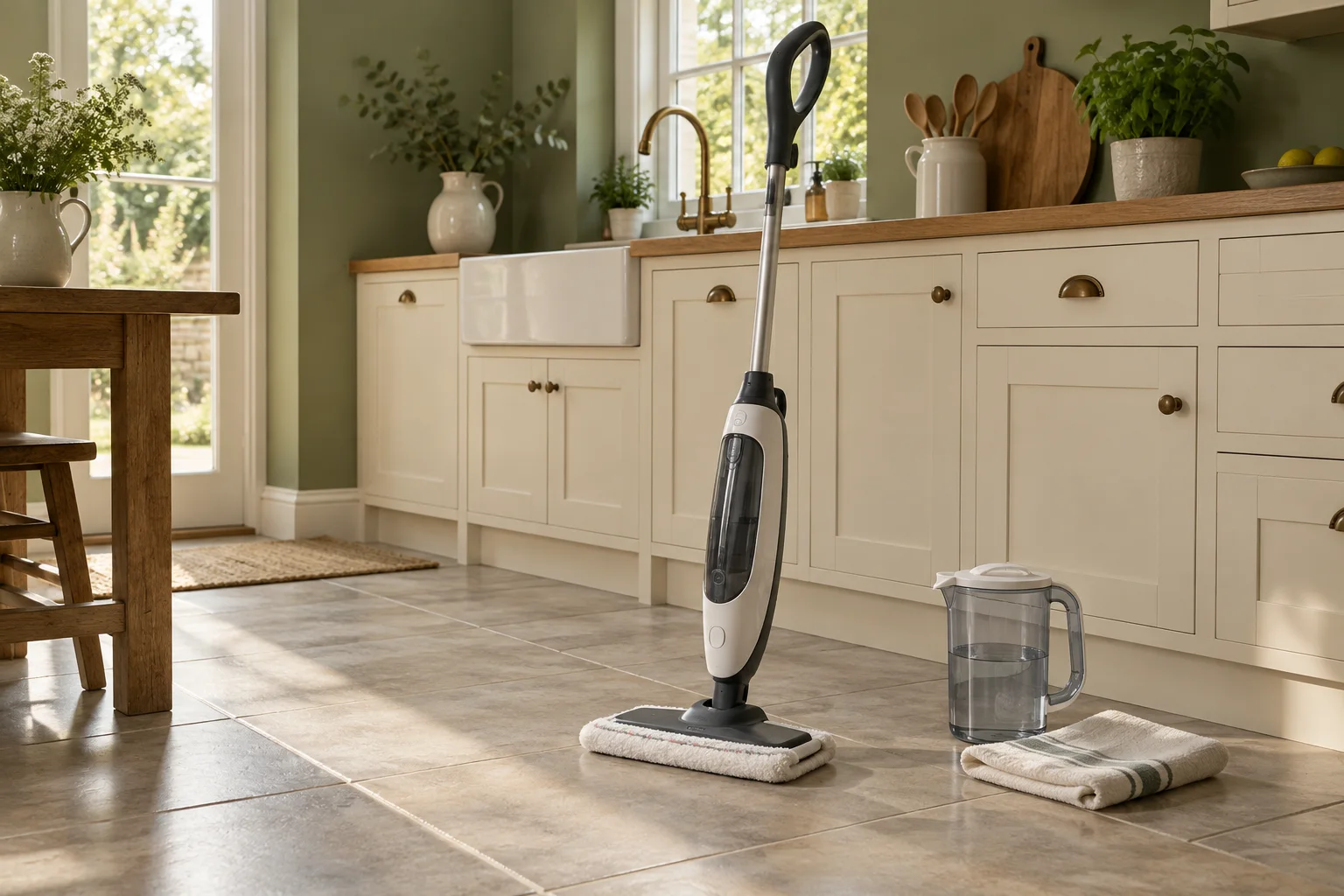
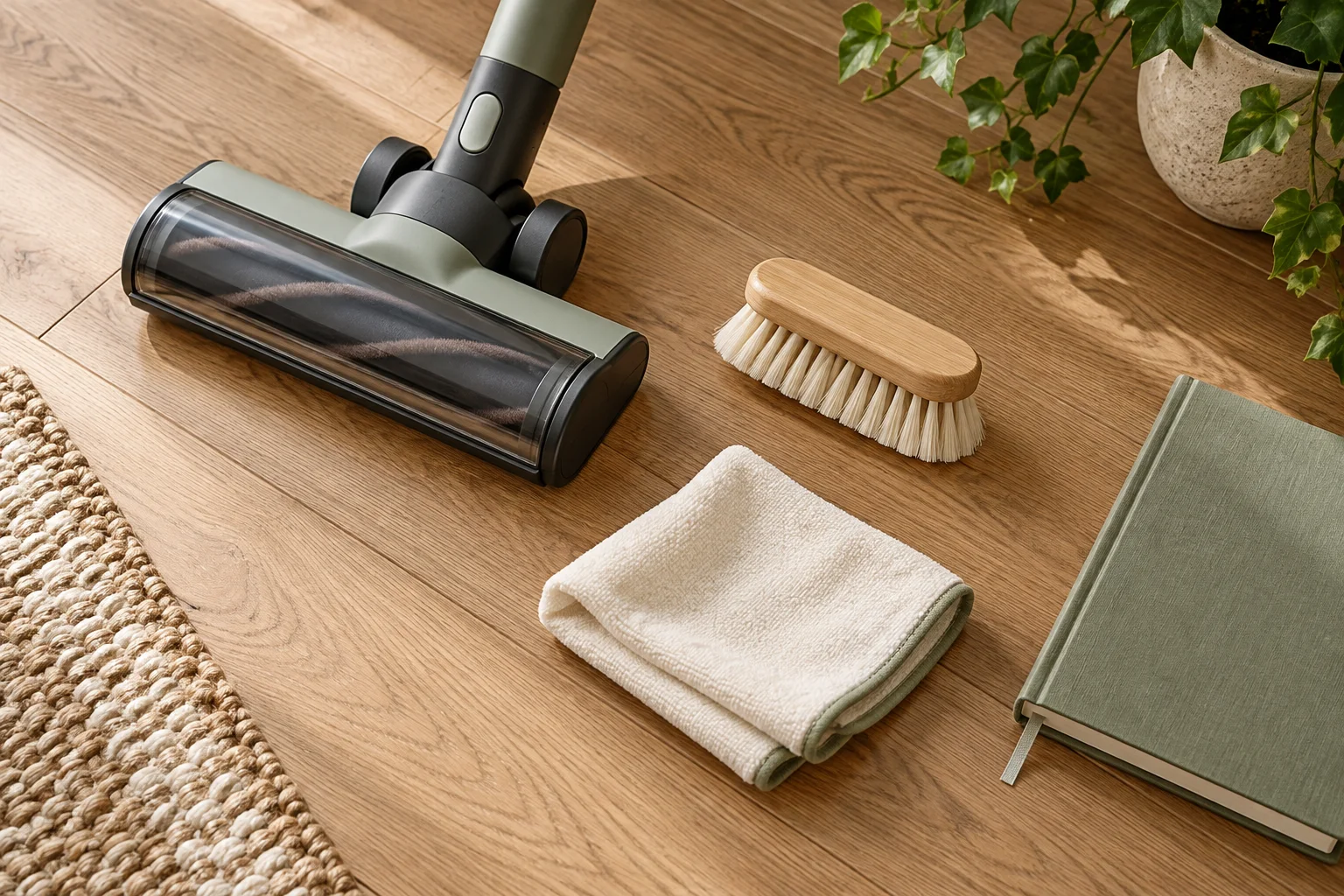
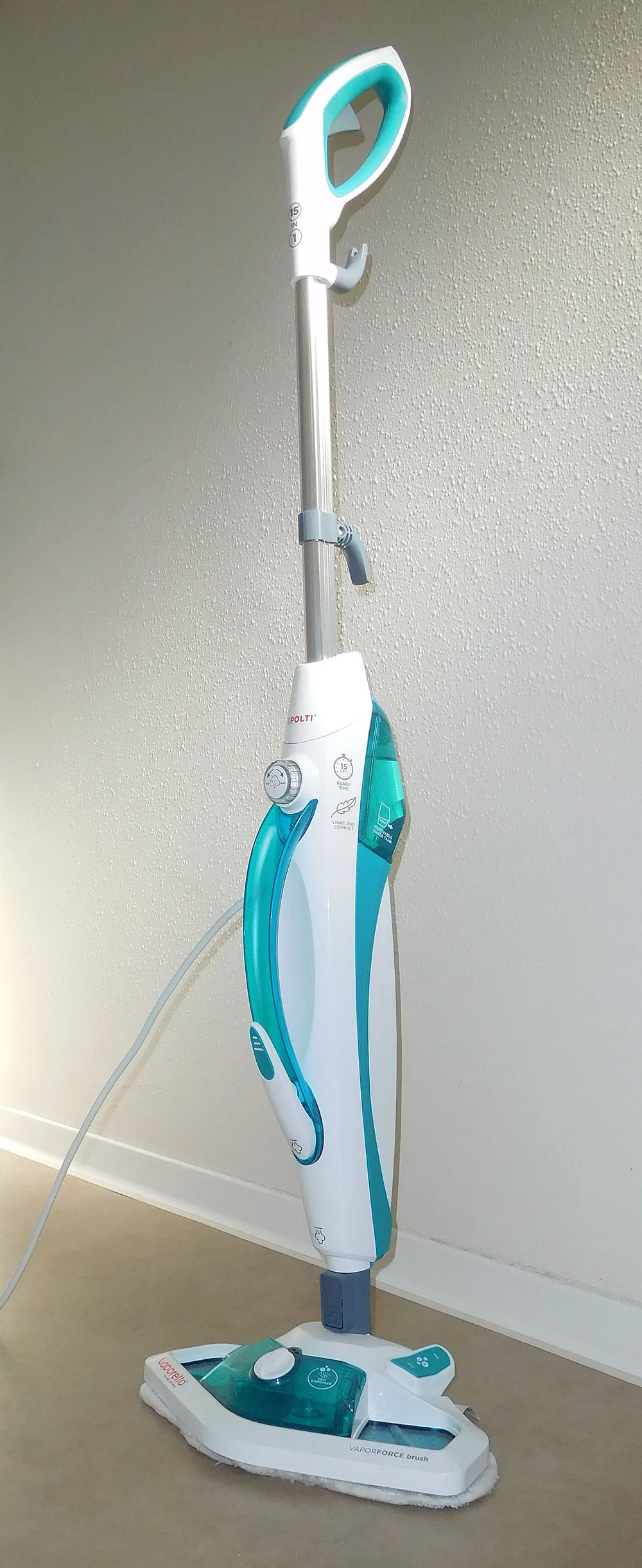
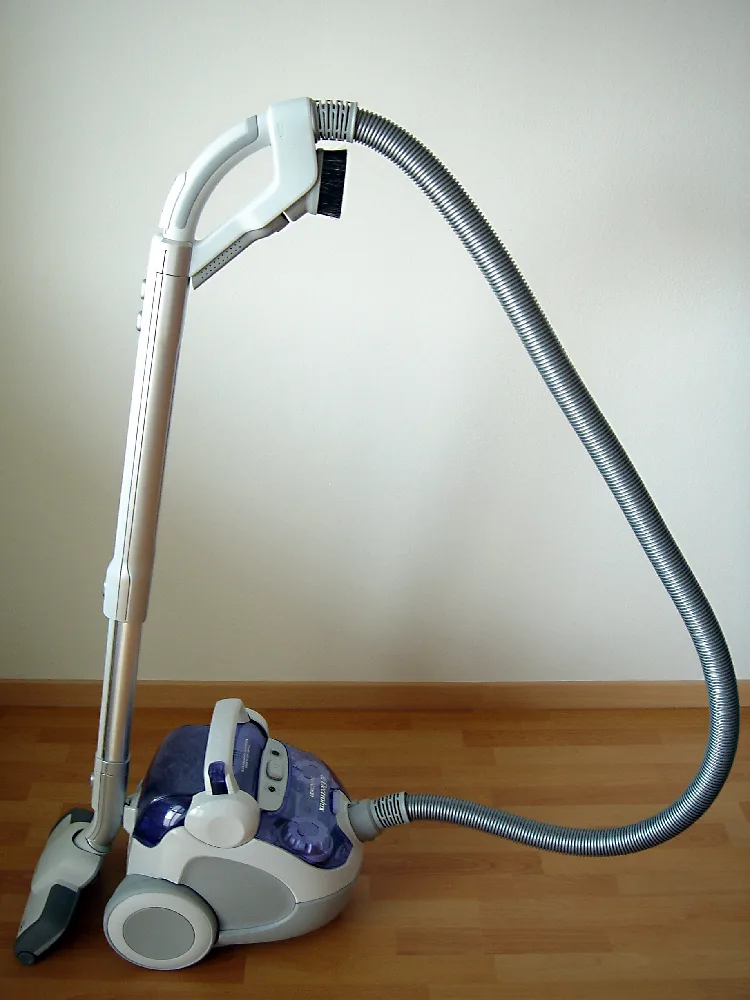
Dry collection and any approved subsequent cleaning should be planned as separate actions. The vacuum photograph shows a floorhead connected to a body by a hose; the exact head and operating method still need to suit the surface. The steam appliance photograph illustrates a different technique, not a recommendation for the pictured parquet.
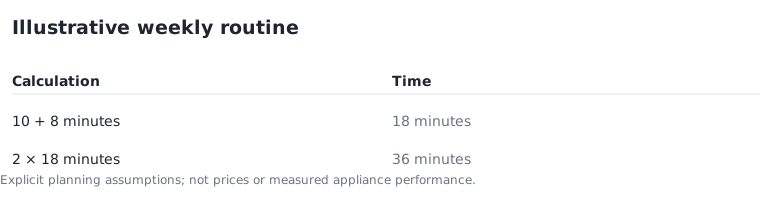
Suppose your approved dry routine takes 10 minutes and the permitted follow-up takes 8 minutes. That is 18 minutes per session before putting equipment away. If you repeat the assumed routine twice weekly, it becomes 36 minutes. These are scheduling examples, not performance measurements or a suggested universal frequency.
Keep uncertainty visible when buying equipment
When comparing cleaners, write a separate yes, no or unresolved beside each required floor method. A machine does not qualify merely because a product title mentions laminate or hardwood. Read the exact model instructions and the floor care guide together, including any conditions that narrow the claim.
If identification remains unresolved, contact the installer or manufacturer with the available records and keep using an established permitted routine. Save the eventual answer alongside the product details. You then have a durable household reference that remains useful after the current cleaner is replaced or another person takes over the task.