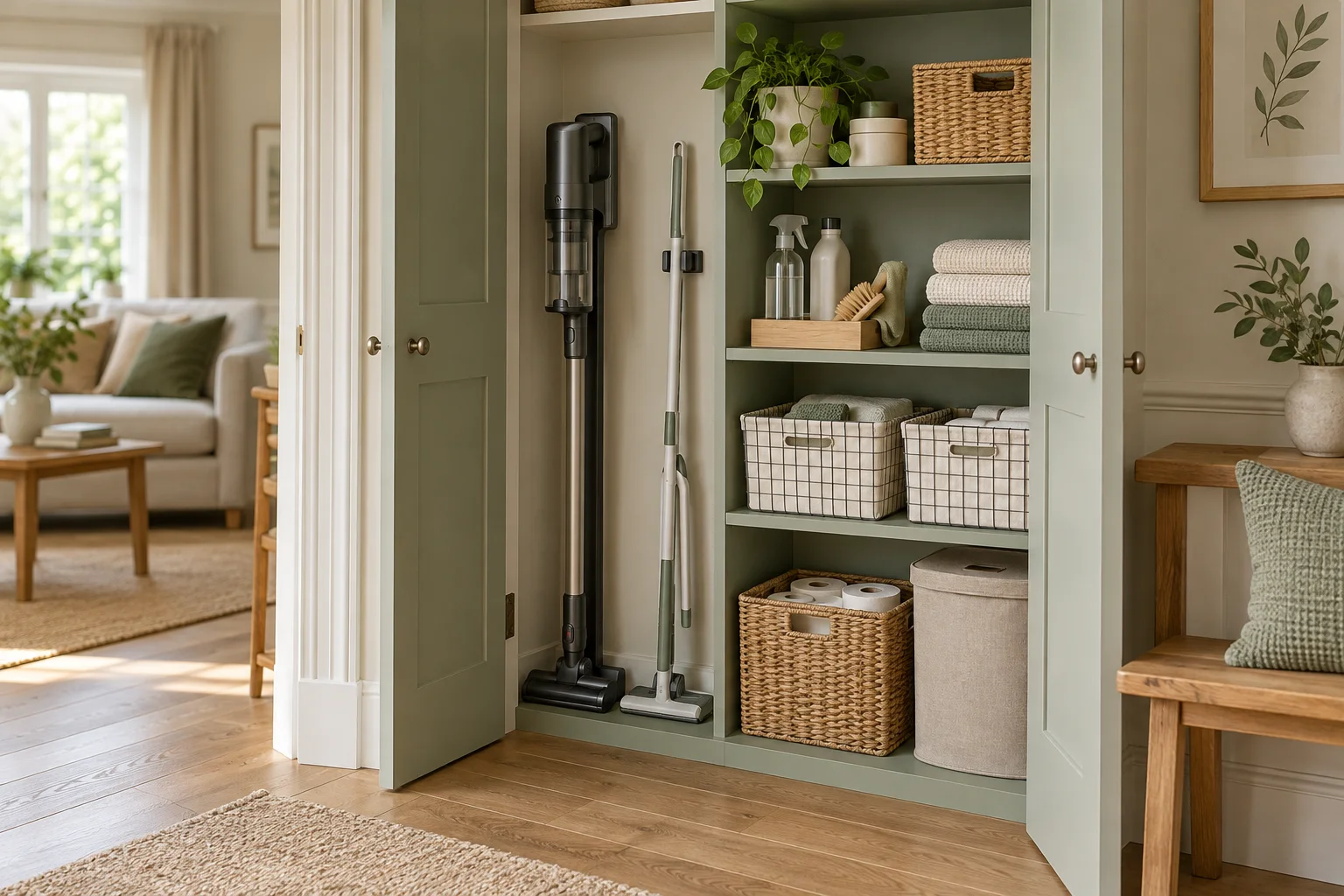
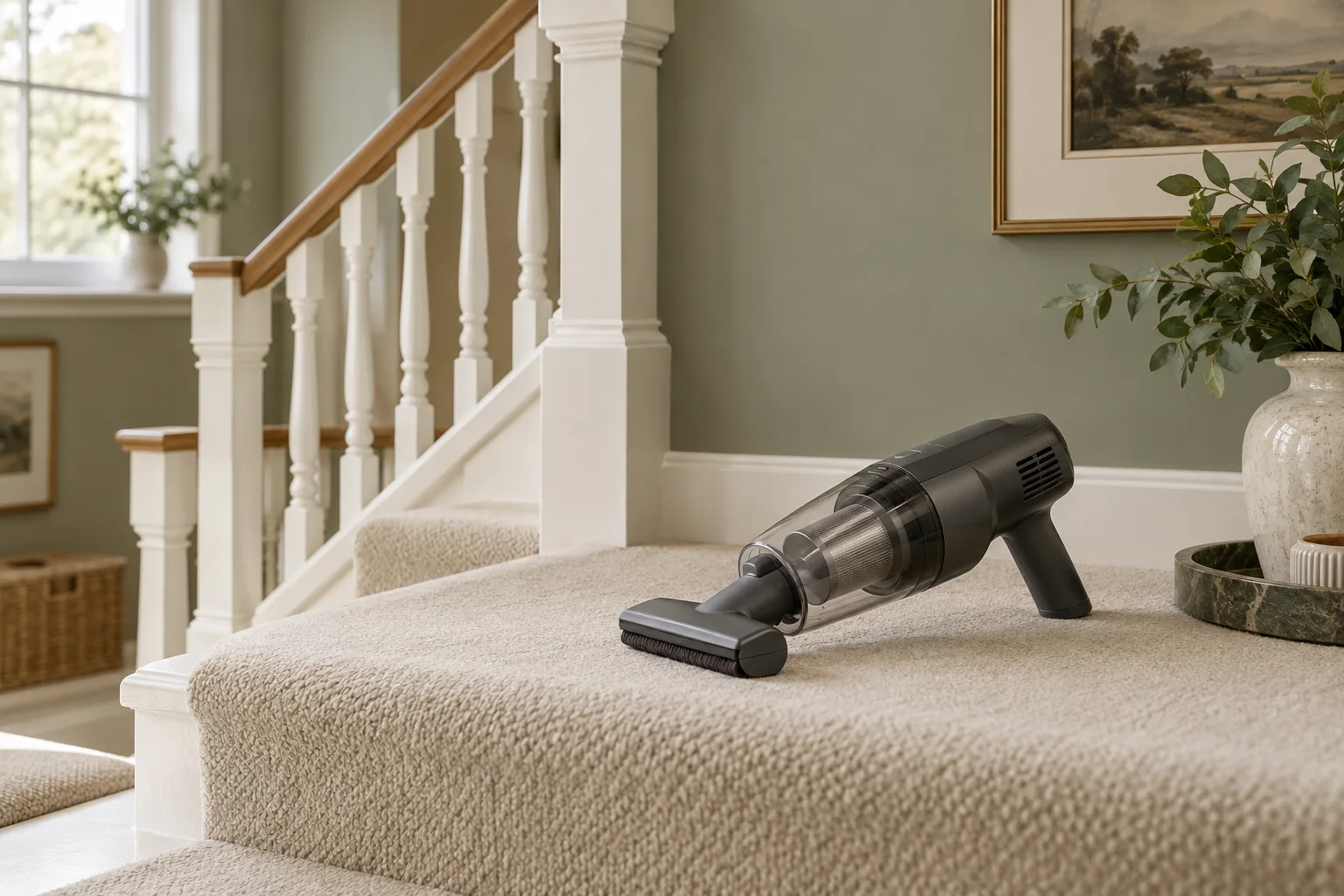
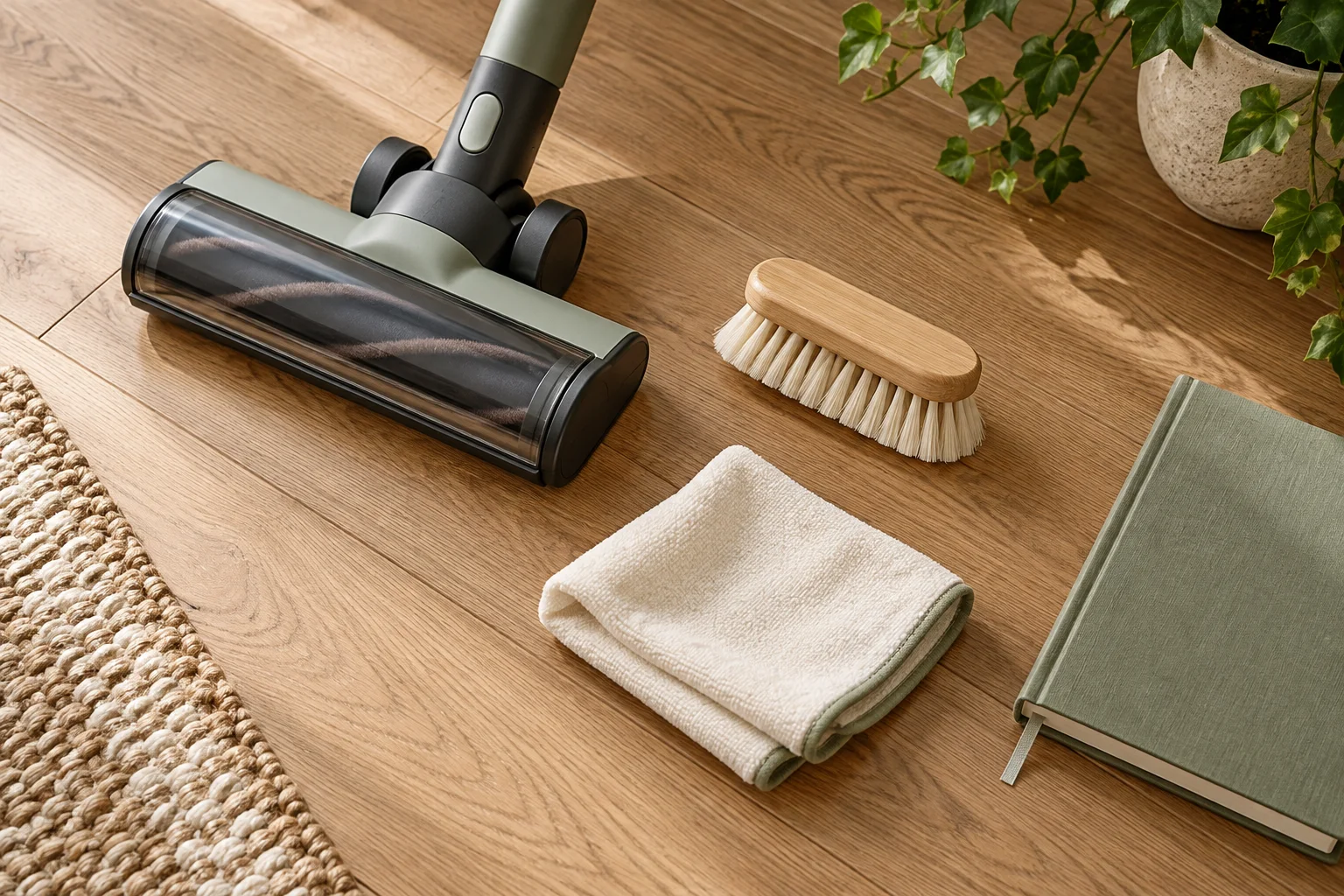
Plan the human time around your cleaning routine
Count preparation, active work and maintenance separately so a weekly schedule reflects real household effort.
Updated:
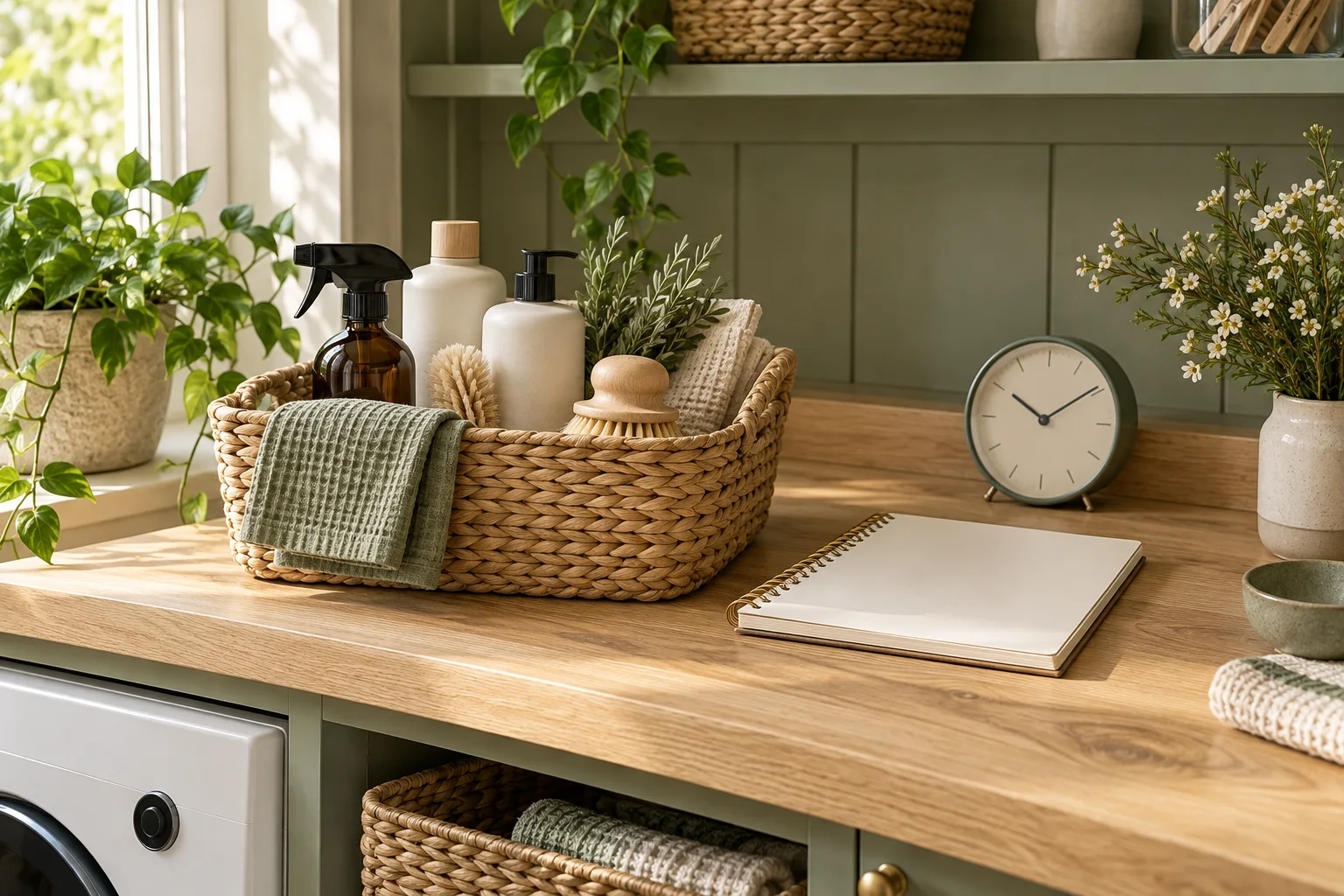
List the work before choosing a frequency
A cleaning schedule contains more than the period when a motor is running. Write down preparing the room, operating or supervising the appliance, putting equipment away and completing the care steps in its instructions. Dyson's general maintenance guide identifies filters, brushes, nozzles and the bin as distinct areas needing attention.
Start with your existing routine and observe one ordinary session. Do not choose an unusually tidy day as the only example. Record interruptions and tasks that occur less often in separate notes. The aim is to understand the household work, not to meet a universal schedule. Manufacturer care requirements still apply even when a personal timetable is busy.
Separate hands-on minutes from elapsed time
Assume preparation takes 5 minutes, active cleaning takes 20 minutes and putting the equipment away takes 3 minutes. The hands-on total is 28 minutes. If the task happens three times in an illustrative week, that becomes 84 minutes. These are invented planning values, not measured performance for any pictured appliance.
Elapsed time may be longer when charging, drying or an unattended cycle is involved. Keep those periods separate instead of adding them indiscriminately to personal labour. A robot running for an hour does not mean you worked for an hour, but preparing its route and completing post-cycle care still belong in the human-time column.

Give periodic care its own place
Add a hypothetical 12-minute weekly maintenance allowance to the assumed 84 minutes of routine sessions. The weekly planning total becomes 96 minutes, or 1 hour 36 minutes. This arithmetic does not recommend a particular maintenance interval; follow the requirements for the exact model and adjust your estimates to observed conditions.
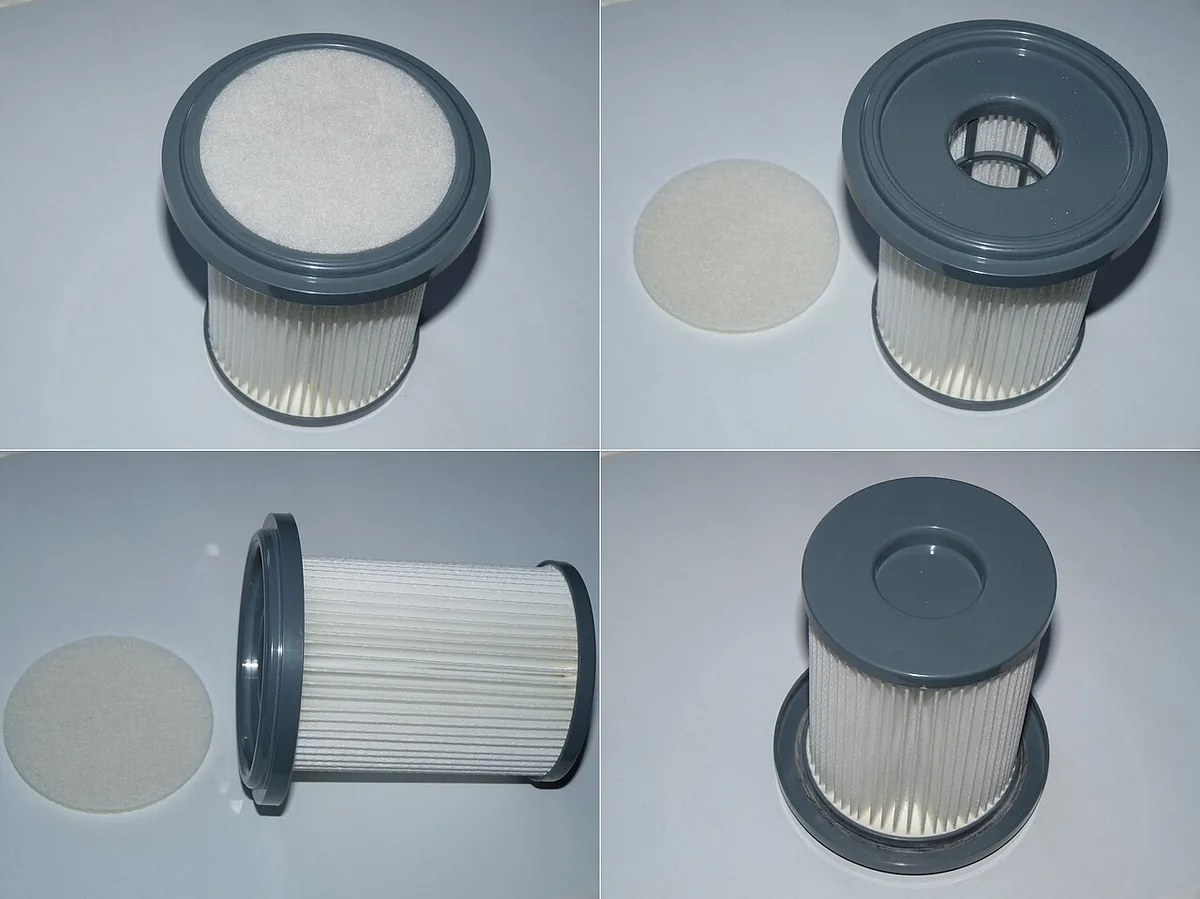
For applicable washable Dyson filters, the official guide requires complete drying after washing. That can affect when the cleaner is available even when the hands-on task is short. Schedule the wash with the next intended use in mind and avoid treating a minimum drying period as proof that a part is ready.

Check whether automation changes the surrounding tasks
A robot may change which parts of the routine you perform, but a product label cannot establish your personal time saving. The official iRobot base-placement guidance calls for open space around its referenced Home Base. Maintaining the route may itself involve moving household objects before a scheduled run.
Measure your actual preparation and care after setting up the appliance according to its instructions. Compare that with the earlier manual routine using the same rooms and standard of work. Keep tasks that remain manual visible. It is reasonable for automation to help one room while another continues to need a separate tool or method.
iRobot: Roomba Home Base placement ?
Make a schedule that survives a busy week
Group jobs by location and equipment where that is practical, but avoid combining incompatible floor methods simply to save a few minutes. Keep the relevant floor care instructions available to anyone sharing the work. Choose a realistic time slot for tasks that need attention, and leave enough availability around parts that must dry.
Review the schedule after a few ordinary weeks rather than rewriting it after one unusual day. If the assumed 96-minute workload repeatedly exceeds the time available, change the scope or distribution of tasks and record what is postponed. An honest smaller routine is more useful than a timetable that looks complete but depends on effort nobody has allocated.