Make brush-roll care part of the cleaning routine
Inspect the right components, follow the removal instructions and budget time for recurring brush maintenance.
Updated:
Find the owner-maintenance instructions first
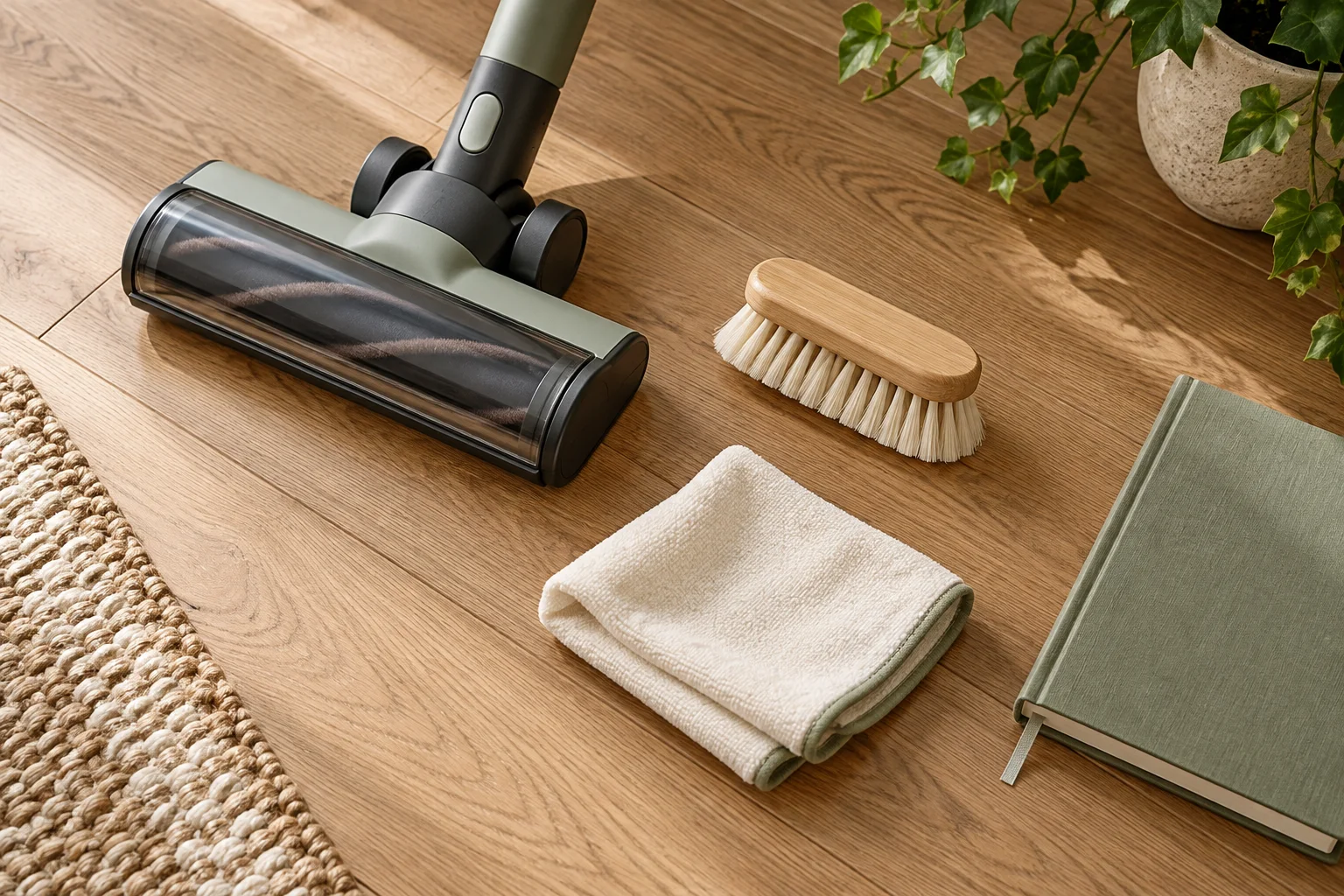
Brush-roll care starts with the instructions for the exact cleaner head. Dyson's general vacuum-care guide identifies brushes and brush bars among the components needing attention, and tells users to switch off and unplug before maintenance. That broad guidance does not make every cleaner head removable or washable in the same way.
Read the removal and refitting steps before opening anything. Note the tools the manufacturer specifies and the parts it allows the owner to handle. Do not infer a method from a similar-looking head in a video. If the instructions are missing, locate them using the complete model reference rather than beginning with a blade or an improvised lever.
Dyson UK: vacuum care guide ? Dyson UK: cleaning filters ?
Distinguish a brush problem from a filter problem
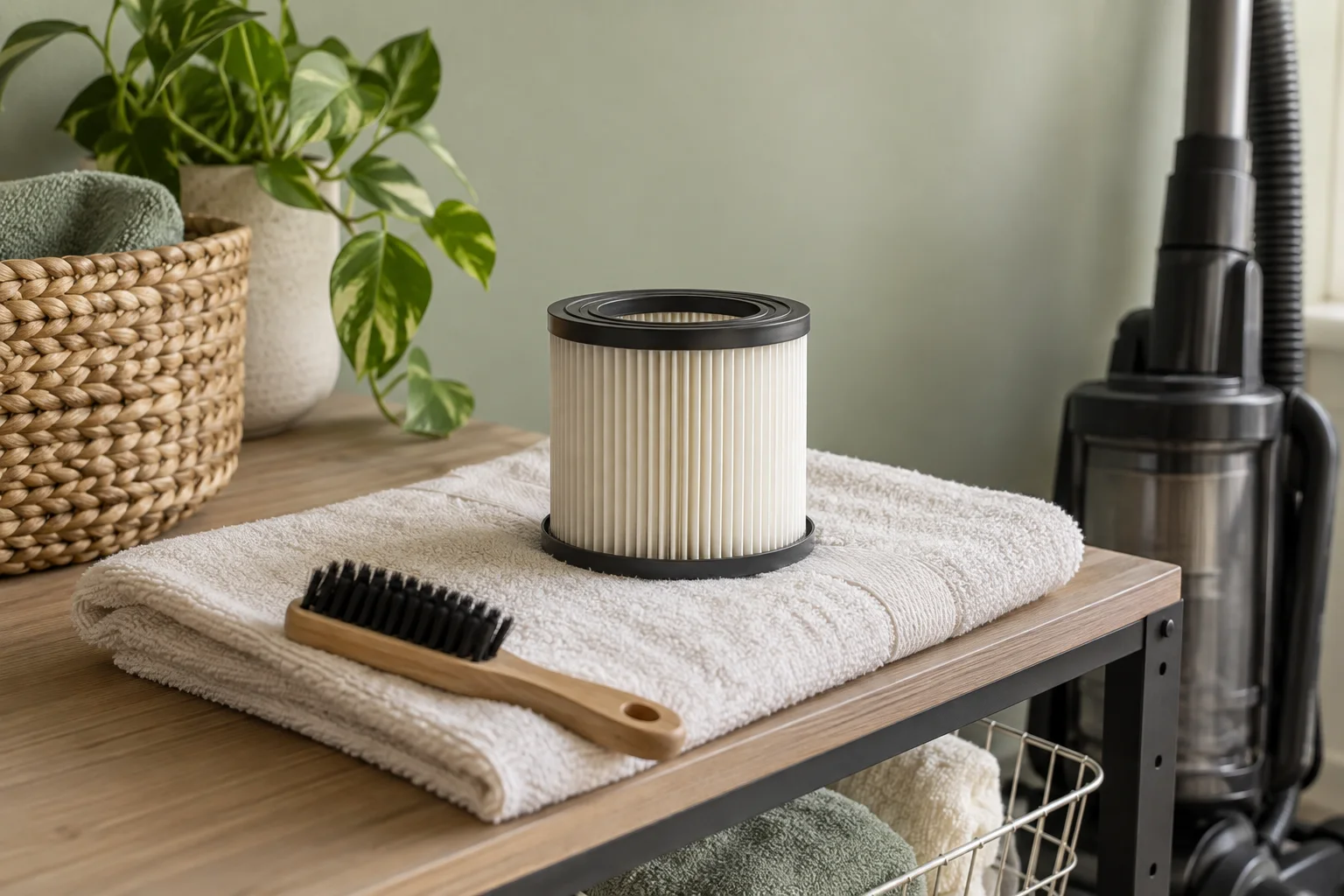
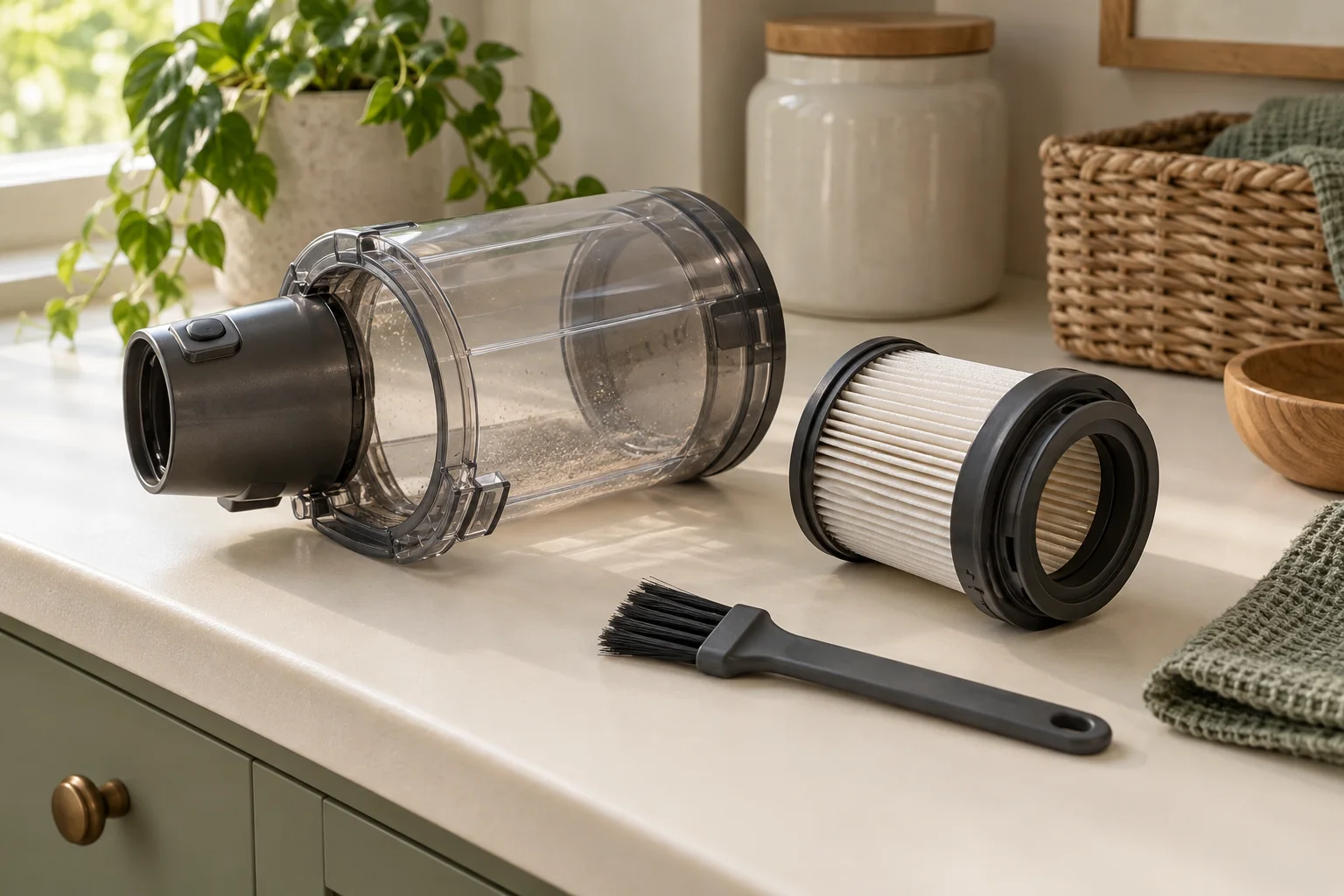
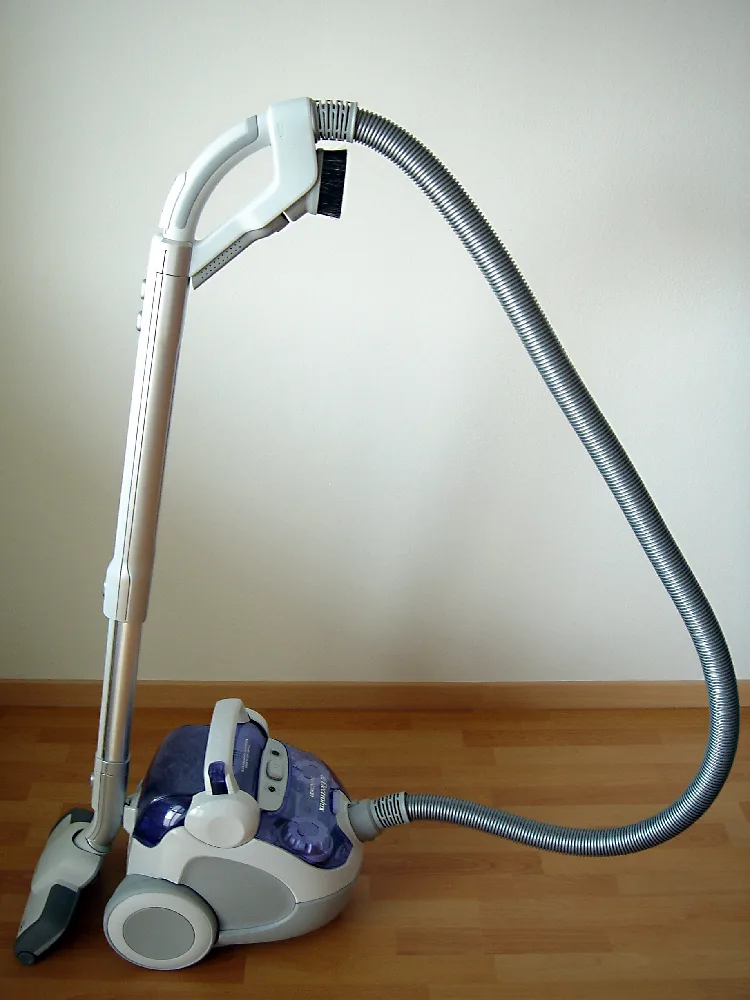
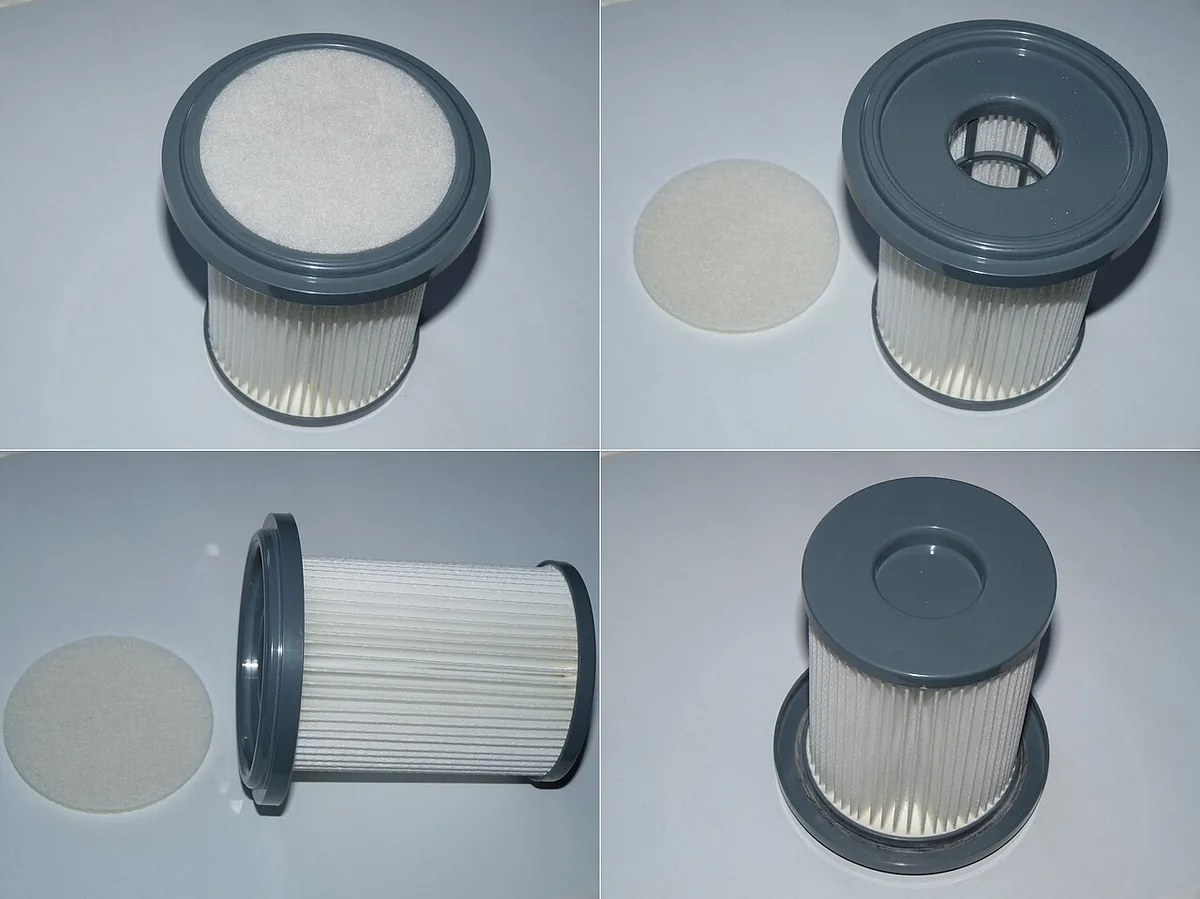
A cleaner has several points along the collection path. The cylinder photograph shows the separation between body, hose and head, while the filter photograph shows another distinct component. Debris around a brush is an observation, not proof that every loss of performance has the same cause.
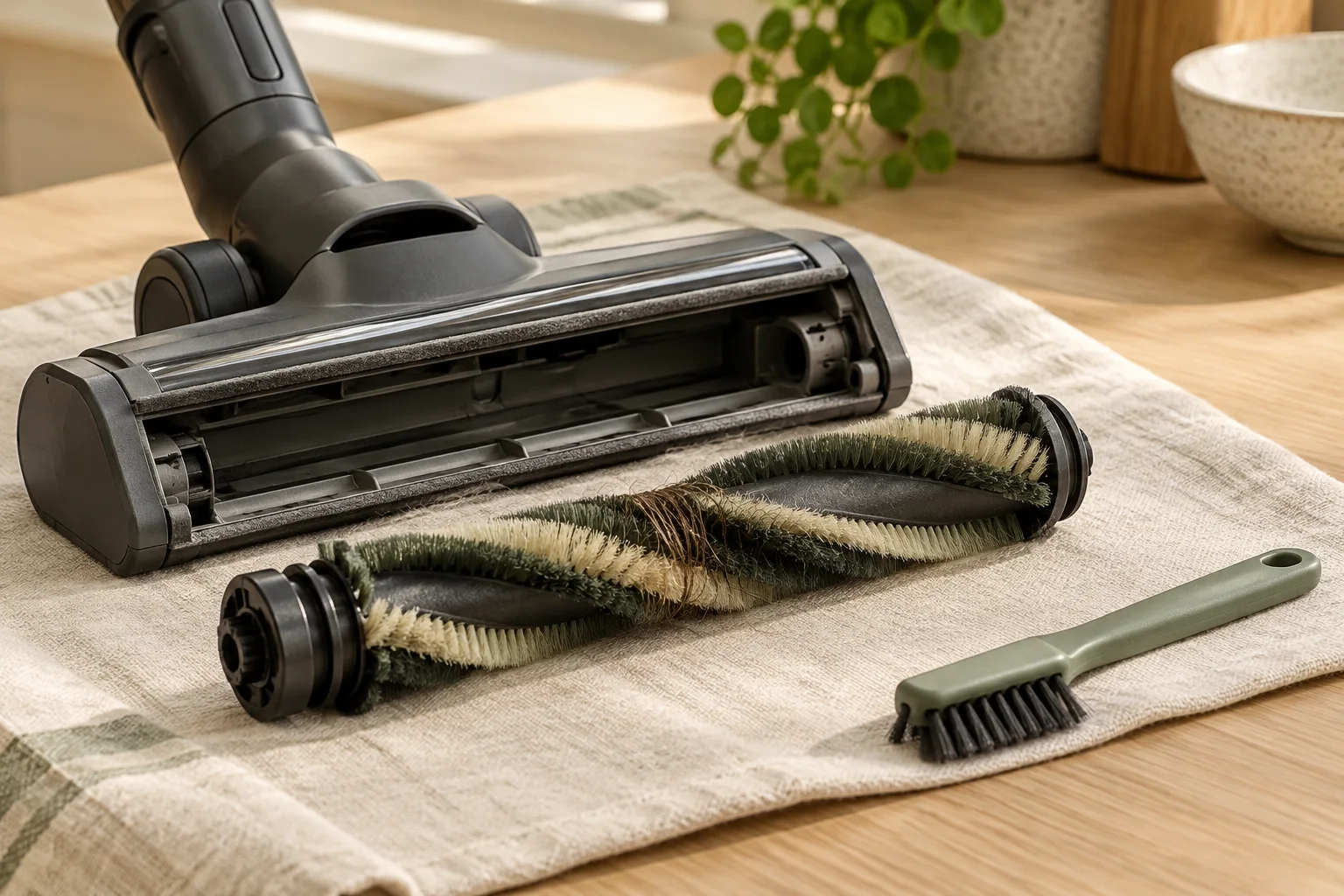
Write down what you actually see and what changed: material around the roll, an obstructed user-accessible passage or a filter maintenance indication. Follow the model's troubleshooting sequence instead of replacing several parts at once. That approach makes the outcome easier to understand and avoids buying a brush when a different documented maintenance step was needed.
Give a recurring job a realistic time allowance
Assume a careful owner-level inspection takes 3 minutes and the permitted cleaning procedure takes another 5 minutes. The total is 8 minutes on that occasion. If your own observed conditions lead to this task twice in a month, the assumed allowance is 16 minutes. These figures describe a planning example, not a manufacturer's recommended interval.
Measure your own task once you are familiar with the instructions. Keep the waiting time for any permitted washing or drying separate from hands-on time. A five-minute intervention that leaves a part unavailable until the next day has a different effect on the household schedule from a five-minute dry inspection.

Check the whole refitting sequence
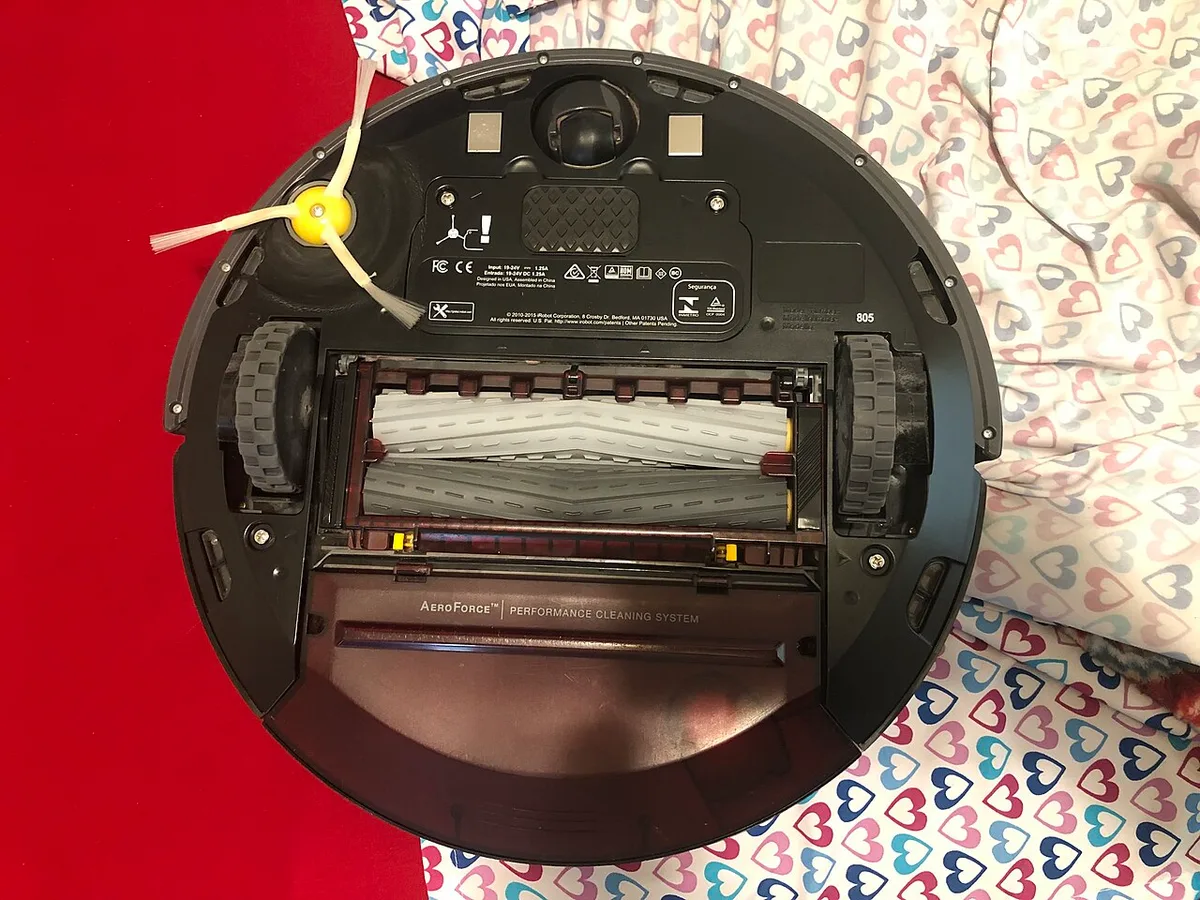
The underside of the historical Roomba photograph shows brushes, wheels and other parts close together. It is useful for understanding the layout, not for borrowing its maintenance steps for a different model. Put each part back in the documented position and confirm the closure or locking action described by the manufacturer.
Do not force a cover over a misplaced component. If the part is damaged, use the exact replacement reference. A brush roll that seems roughly the right length may still differ in its ends, drive connection or housing. Keep old and replacement packaging separate until you have verified the new part against the official compatibility information.
Miele UK: model-specific bag and filter finder ?
Make the routine observable rather than automatic
Keep a short log containing the date, the part inspected and the action taken. Over time this tells you which tasks recur in your home. It does not establish a universal schedule for other homes, pets or floor coverings. Follow any minimum care requirements in the manual even if a quick visual check looks reassuring.
For another assumed comparison, 8 minutes of care every week is 32 minutes over four weeks; a twice-monthly routine is 16 minutes. The point is to expose the work involved, not to recommend skipping care. Choose a machine whose accessible parts and documented maintenance you can manage comfortably, and include that time in the purchase decision.